
Diocesan-wide survey guides the diocese’s focus for the future
By Emily Booker
The Diocese of Knoxville has just concluded the largest survey of the faithful in its history. With 100 percent participation among the parishes, the survey results paint a detailed sketch of the Catholic Church in East Tennessee and give direction for the diocese’s future goals.
When Bishop Mark Beckman arrived as the fourth bishop of Knoxville in July 2024, he immediately wanted to get to know the area and its people.
“It was important to get a sense of the diocese that first year,” Bishop Beckman said. “I took on the role of looking, listening, and learning. And what became very clear early on was that there was a desire and a need to have a direction for the diocese.”
During Lent (March 5–April 20), parishioners were asked to fill out the Disciple Maker Index (DMI), commenting on parish life, their personal beliefs, and the health of the Catholic community in East Tennessee. Parishioners were asked more than 75 questions, ranging from if their parish was welcoming and if they felt comfortable answering questions about Church teachings to how often they prayed and attended Mass.
The results are helping to shape the direction of both the Diocese of Knoxville and individual parishes in the coming years.
The DMI is part of a multi-year collaboration between the Diocese of Knoxville and the Catholic Leadership Institute, which provides bishops, priests, religious, deacons, and laypeople with leadership formation and consulting services that strengthen their confidence and competence in ministry. It has been serving dioceses and parishes for more than 30 years.
CLI leadership consultant Brendan Menuey, who is the project leader for the Diocese of Knoxville, explained that CLI provides Church leaders with business and leadership skills to support their ministry.
“We provide support when a new bishop is installed, and we do an assessment of the Chancery, which involves interviews and some focus groups, a survey of the Chancery staff, and a survey about the Chancery from the priests. We provide the bishop with findings and recommendations,” Mr. Menuey said.
“We also do a survey of all the priests called the Priest Leadership Inventory in order to help the bishop make good assignments, and we also do the Disciple Maker Index, where every parish has the opportunity for parishioners to participate,” he added.
He noted that Catholic Leadership Institute is completely donor-funded. The diocese does not have to pay anything for the support and guidance it receives.
“Catholic Leadership Institute has experience with many dioceses across the country, and I felt it would be helpful to have an organization of that caliber help us to do that visioning,” Bishop Beckman said.
Diocese of Knoxville priests have walked with Bishop Beckman during the bishop’s “get-acquainted” year in the diocese as he has met with them, visited their parishes, and assessed the diocese’s many ministries. The priests and their parishioners are poised to take the next step in the bishop’s vision for the Church in East Tennessee.
“Bishop Mark is very much a person of dialogue and listening to the voices and the desires of the people,” Father Peter Iorio, vicar general and pastor of Our Lady of Fatima Parish in Alcoa, said. “He came in his first year as bishop wanting to look, listen, and learn. And as a new bishop he was offered guidance by the Catholic Leadership Institute to help him be the best bishop that he can.”
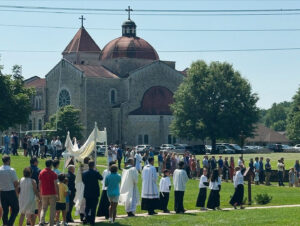 Looking at a picture of the diocese

As of 2024, the Diocese of Knoxville is composed of 78,566 Catholics. There are 50 parishes, one mission, and one public association of the faithful. The diocese has 73 diocesan priests and 20 religious-order priests serving the needs of the faithful, along with 109 permanent deacons.
This year, 953 people entered into full communion with the Catholic Church at the Easter Vigil. As of 2023, the Diocese of Knoxville was one of the top dioceses in the United States for new, non-infant Catholics, relative to total population.
There are 47 religious-education directors in the diocese, providing faith formation at all stages and ages. Sixteen parishes offer the Catechesis of the Good Shepherd atrium program for children. While most parishes offer youth ministries for teens, only a handful have ministries for young adults (18-35).
More than 9,800 people participated in the DMI, about one in eight Catholics in East Tennessee.* Of the respondents, 62 percent were women and 38 percent were men.
Respondents tended to be older, with 43 percent over the age of 65, 43 percent between 36-65, and 14 percent being below the age of 36. Seventy-three percent of respondents were currently married, with 14 percent being single, 5 percent being divorced, and 8 percent being widowed.
Eighty percent of respondents identified as Caucasian, while 15 percent identified as Hispanic, 2 percent identified as Asian, and other ethnicities (including Black, Middle-Eastern/North African, and Native American) made up less than 1 percent each.
When asked about parish membership duration, the results showed the recent growth of many parishes, as 39 percent have been members of their parish for less than five years. Sixteen percent have been members of their parish for six-10 years, 19 percent have been members of their parish for 11-20 years, and 26 percent have been members of their parish for more than 20 years
 Listening to the people’s voice
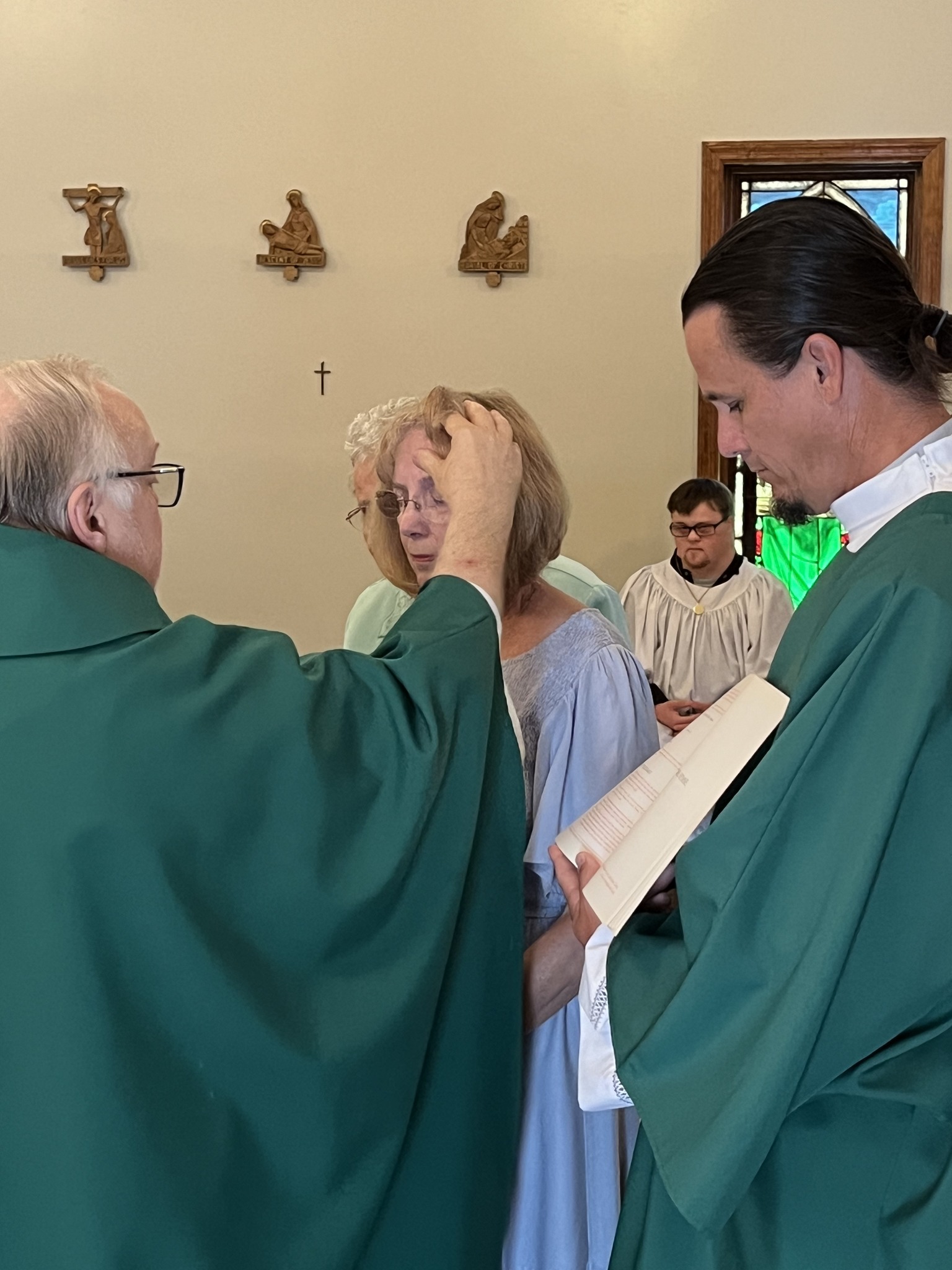
“While [results] vary by parish, the diocesan averages are very promising,” Mr. Menuey observed.
The survey results revealed Catholics in East Tennessee have a higher-than-average commitment to core Catholic teachings.
Some 94 percent agreed or strongly agreed on the Real Presence of Jesus in the Eucharist.
On the Bible, 95 percent agreed or strongly agreed Scripture is truly the Word of God.
On the role of the Church, 90 percent agreed or strongly agreed it’s critical to their relationship with God.
All of these results trend higher than the national average.
These beliefs were also reflected in Mass attendance. Eighty-three percent reported attending Mass weekly, with another 11 percent attending Mass daily. Eighty-nine percent also reported spending some time in individual prayer every week.
Some 21 percent go to eucharistic adoration weekly, while 26 percent go at least quarterly, another 26 percent go at least annually, and 27 percent never go.
Respondents overwhelmingly reported support for their parish and pastor. Ninety percent reported they would recommend their parish to a friend, and 85 percent reported they would recommend their pastor to a friend.
While confidence in the beliefs of the Church was strong, there was less confidence in living out a missionary spirit. Only 23 percent strongly agreed that their parish confidently equips them to answer questions about the faith, and 31 percent strongly agreed their parish forms them as a disciple. Some 63 percent reported that they have never received pastoral counseling or spiritual direction.
There was fairly low attendance for regular Bible study or prayer groups, with 34 percent reporting never attending. Sixty-five percent reported never attending a spiritual retreat.
These insights show the need for a renewed focus on religious formation for Catholics of all ages, helping faithful individuals come to know the Lord more deeply, and creating stronger connections in the community of faith.
Still, other results showed how some people do live out the missionary impulse, with 89 percent reporting that they have prayed with someone in the past year, and 74 percent reporting that they have invited someone to Mass in the past year. Some 82 percent have volunteered to serve others in the past year.
Inviting someone to Mass one Sunday feels much easier than inviting someone to consider a call to religious life. Results also showed that few have ever invited a man to consider the priesthood (19 percent) or invited a man or woman to consider religious life (24 percent).
The diocese has already begun a renewed focus on vocations, with the Hundredfold Workshop held in September to support parishes in establishing vocations ministries.
Of parents of school-age children who responded to the DMI survey, 32 percent send them to Catholic school, showing room for potential increased enrollment. There are currently 3,480 students attending the 10 diocesan schools in East Tennessee.
“I like the fact that we’re getting broad input from throughout the diocese. In a sense, this is part of a synodal process where we’re listening to the people of God in all of our parishes who have the opportunity to participate because that gives us a sense of what are the big needs across the diocese and where are we going,” Bishop Beckman said.
Similarly, each parish will be looking at its parish-specific results to assess its parish-level strengths and opportunities.
People identified as parish leaders were asked additional questions. Their results showed a strong desire for more volunteers and more involvement from young people. They also desired more catechesis on Church teachings and more clarity on parish vision.
“Every parish can see their own results and see where their people are strong and see where there may be gaps that need extra support,” the bishop said.
Father Iorio said that CLI provided resources and seminars for parishes on how to present their DMI results and understand the data. They also provided guidance on taking that data and using it to help parishes moving forward.
“They say, look at what your parish can do to set goals and prioritize,” the pastor said.
 Learning to turn data into action
So, now that the results are in, what happens next?
“We’re really proud of what we got, and the bishop’s proud of what we got. People shared their perceptions, and now we need to take those perceptions and do something with it that could really help the diocese as a whole,” Mr. Menuey said.
The DMI results are at the heart of a strategic plan for the diocese, laying out priorities and goals for its future.
This summer, Bishop Beckman formed a strategic-planning committee to study the DMI results and develop a diocesan strategic plan, focusing on a few key priorities.
“We met over the summer along with Russell Crook, a professor from the University of Tennessee, and we worked on looking at the diocesan-level DMI data in addition to our own experiences and discerning what would be appropriate priorities for the diocese,” Mr. Menuey said.
Other committee members included Father Iorio, Monsignor Al Humbrecht, Father Michael Cummins, Deacon Hicks Armor, Deacon David Duhamel, Tricia Bruce, Barbara Golder, Jim MacDougall, Blanca Primm, and Hailey Schapker.
“The results of the surveys that we took in Lent were presented to us, and from there the bishop appointed members of a strategic-planning committee to work with the representative from CLI, and we came up with goals to put into practice for the diocese,” Father Iorio said.
He noted that the committee intentionally had a diverse background, representing both young and older, clergy and lay, different regions of the diocese, and inclusion of Chancery and school personnel.
Along with their own life experiences and visions outlined by Bishop Beckman, the committee members used the results of the DMI survey to identify strengths and areas of opportunity for the Diocese of Knoxville.
They determined five areas of priority: promoting vocations, increasing engagement of youth and young adults in their parishes, reaching out to those in need, increasing engagement in faith formation, and increasing Catholic school enrollment.
The strategic plan will address these priorities and lay out actionable goals.
“I think that the plan that we have is going to be a great plan, and to me it’s great that we have granular detail, specific detail from all of our parishes,” Bishop Beckman said. “We also had our priests fill out their own evaluations, and we also did a survey of the Chancery offices and their service to the Church, so it’s kind of a three-pronged approach. And I feel very good about all three of those levels.”
Bishop Beckman has appointed individuals to oversee the follow-through and development of each priority. Each priority will have measurable, data-driven goals.
Father Iorio also expressed optimism about the process and putting these results into action.
“To me, it’s very exciting because it involves everyone who wanted to participate, and I believe that our return rate for participation for the surveys was excellent. It helps us to be a Church that is listening and a Church that responds to people and their specific needs locally,” he said.
He noted that the DMI and strategic plan correlate with the synodal process taking place in the Church across the globe. There are strong efforts being made to have people’s voices heard and have people contribute to decision-making.
Ultimately, it is about building connection, Father Iorio said.
“This [process] will help us build better relationships in different ways: among priests and their people, among the bishop and his priests and his people, and among priests, parishioners, and Chancery staff. And I think that is a reflection of the Holy Trinity, relationship-building. I think it’s got great potential to bear a lot of fruit for our diocese.”
The full strategic plan for the Diocese of Knoxville will be released in January. Disciple Maker Index results and resources can be found at dioknox.org/dmi. You can also sign up to receive updates on the Diocese of Knoxville strategic plan.
*The surveys were primarily completed by regular Sunday Mass-goers. The survey also did not include responses from children. On average, parishes had 34% of regular Sunday Mass-goers complete the DMI, and some parishes had as high as 81% of their average Sunday Mass attendance complete the survey.