
By Father Arthur Torres
Beloved readers and faithful Christians of the Diocese of Knoxville,
Devotion to the Sacred Heart of Jesus, together with praying the holy rosary and devotion to Our Lady of Mount Carmel, is one of the deepest and most widespread devotions within the Catholic Christian tradition. This spiritual image represents the infinite, merciful, and sacrificial love of Jesus Christ for humanity. Its profound symbolism has inspired millions of faithful throughout the centuries, inviting them into a more intimate and trusting relationship with God.
Last year marked the 350th anniversary of the apparitions of the Sacred Heart of Jesus (1675–2025) to St. Margaret Mary Alacoque. This year, the United States of America commemorates the 250th anniversary of the signing of the Declaration of Independence. In light of this historic milestone, the U.S. Conference of Catholic Bishops joins in the celebration by highlighting the contributions of Catholics and the impact of our faith on the history of this nation.
Therefore, at this significant moment in history, the bishops of the United States will consecrate the nation to the Sacred Heart of Jesus on June 11 and invite all parishes to unite in this act of consecration.
Biblical and theological foundations of the Heart of Jesus
From the beginning of the Christian era, dear readers, believers have shown a profound interest in the Heart of Jesus, as seen already in the earliest disciples of Christ. First, the evangelist Matthew presents Jesus’ own invitation:
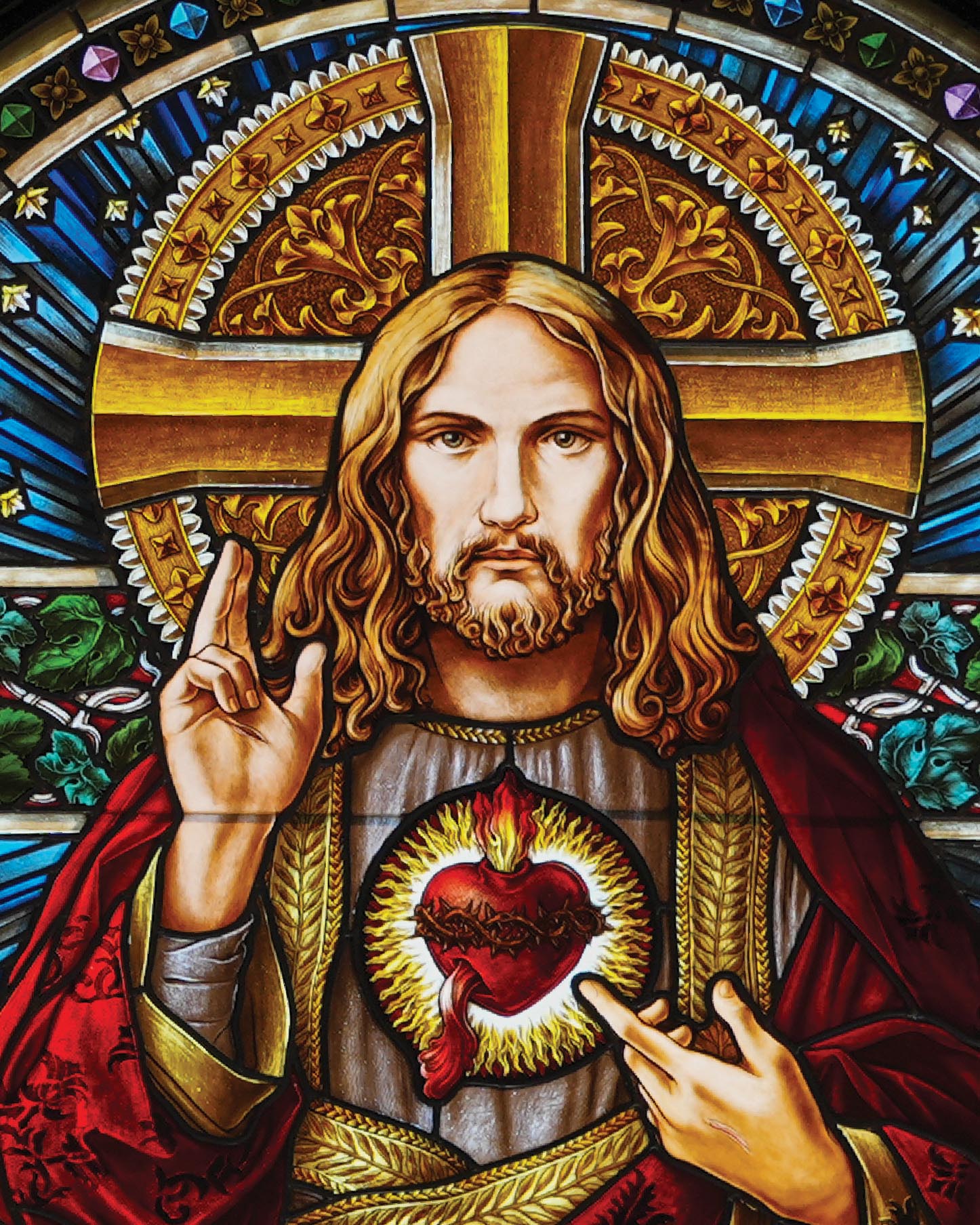 “Take my yoke upon you and learn from me, for I am meek and humble of heart, and you will find rest for your souls” (Matthew 11:29).
This is an invitation from Christ to find spiritual rest by embracing His gentleness and humility of heart. By learning from Him, one finds relief from emotional and spiritual burdens, embracing a way of life rooted in service, patience, and interior peace—seen through His Heart, which knows how to love without measure.
The second and third Gospel references to the Heart of Jesus are found in the Gospel of St. John, which presents two powerful scenes. The first depicts the beloved disciple reclining beside Jesus, resting his head on the Master’s chest (John 13:23-25), a gesture of consolation following the announcement of betrayal (John 13:21). The second is the image of Christ’s pierced side on the cross, from which blood and water flowed (John 19:34).
Indeed, the early Church Fathers interpreted these passages through a spiritual lens, uncovering a deeper meaning beyond the literal narrative. According to their reflections, the Gospel of John reveals the Sacred Heart of Jesus as the Fons Vitae—the “fountain of life,” which theologian Hugo Rahner describes as the source of the Church, the Gospels, the sacraments, and grace.
St. Irenaeus likewise affirms, regarding the Church’s mission rooted in the Heart of Christ: “The Church is the fountain of living water that flows for us from the Heart of Christ. Where the Church is, there is the Spirit of God; and where the Spirit of God is, there is the Church and all grace. But the Spirit is truth. Those who do not partake of this Spirit receive neither nourishment nor life within the bosom of our Mother Church, nor can they drink from the pure spring that flows from the Body of Christ.”
Thus, we see that devotion to the Heart of Jesus finds its origins both in sacred Scripture and in the teachings of the Church Fathers.
What the Sacred Heart of Jesus means from the perspective of faith
Devotion to the Heart of Christ is not the worship of an organ separated from the person of Jesus. What we contemplate and adore is Jesus Christ in His entirety—the Son of God made man—represented in an image that highlights His Heart.
The physical heart serves as a privileged sign of the innermost center of the Incarnate Son and of His divine and human love. More than any other part of His body, it is the natural symbol of His immense charity. In other words, the Heart is a way of contemplating Christ from within.
Therefore, this devotion does not end in fleeting emotion but leads to a deeper knowledge of Jesus, to understanding His way of loving, and to entering into His dynamic of love for the Father and for neighbor.
Origin and development of the devotion to the Sacred Heart
Before the widespread devotion to the Heart of Jesus, there already existed in the Middle Ages the devotion to the pierced side of Christ—a practice centered on His redemptive love, symbolized by the wound in His side from which blood and water flowed.
This wound represents the fullness of His love: “He loved them to the end” (John 13:1); it is the source of the sacraments—baptism and the Eucharist—and of divine mercy. Many medieval saints, such as St. Gertrude the Great (1256–1302), meditated on this mystery as the “icon” of Christ’s unconditional love, as did St. John the beloved disciple (John 19:34). Likewise, St. Mechtilde of Hackeborn (1241–1298) contemplated the “exchange of hearts” with the Divine Savior.
Thus, the pierced side and Heart of Christ become the source of new life and a refuge for all who believe in Him (John 15:17).
Although veneration of Christ’s love has existed since the earliest centuries of Christianity, the specific devotion to the Sacred Heart took clearer form in the 17th century and spread rapidly through the private revelations granted to St. Margaret Mary Alacoque. According to her testimony, Jesus revealed His Heart, burning with love for humanity, and asked that this devotion be promoted as a call to conversion and reparative love.
These revelations were supported by figures such as St. Claude de la Colombière, which helped secure their recognition within the Church. Nevertheless, this devotion has not always been universally embraced. Pope Pius XII addressed this in his encyclical Haurietis Aquas, lamenting that such a noble devotion is sometimes undervalued, even among those zealous for the faith and their own satisfaction.
The symbolic meaning of the Heart of Jesus
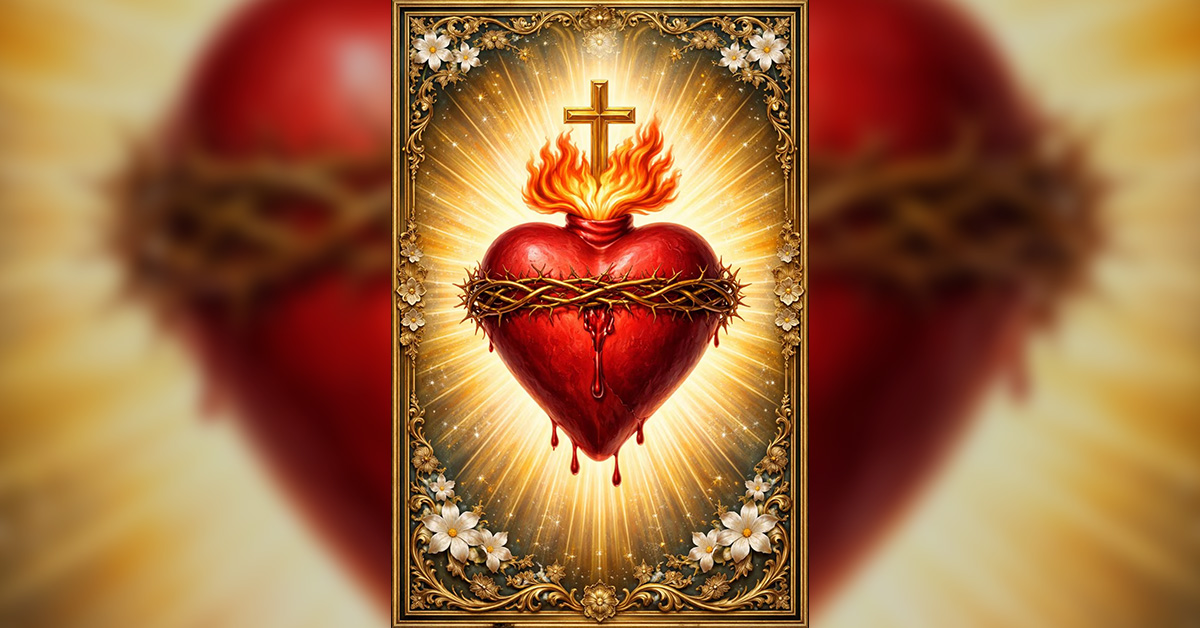
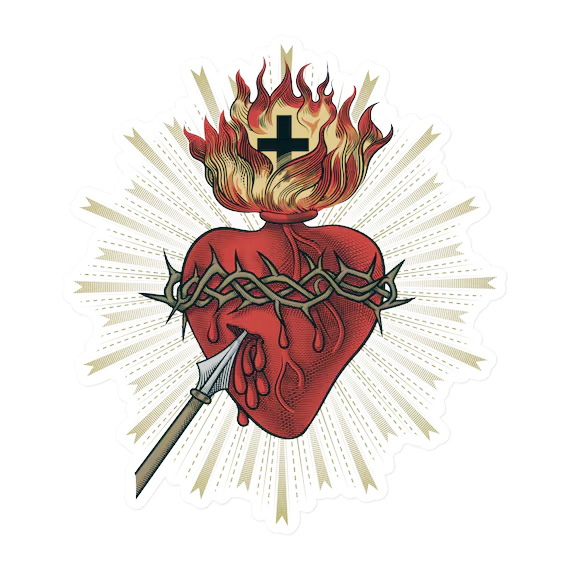 The Sacred Heart is commonly depicted as a human heart surrounded by flames, crowned with thorns, and often topped with a cross. Each element carries deep meaning:
- The Heart: Symbol of Christ’s divine and human love, pierced yet still pouring forth grace.
- The Flames: Represent the living fire of His love for all humanity.
- The Crown of Thorns: Signifies the suffering and humiliation of His Passion, transformed into glory.
- The Cross: The sign of our redemption and the ultimate sacrifice of love.
- The Open Wound: From His pierced side flowed blood and water—symbols of the Eucharist and baptism—revealing the birth of the Church and the outpouring of divine mercy.
This image is not merely artistic but also a spiritual invitation to reflect on Christ’s unconditional love, forgiveness, and total self-giving. It calls believers to live essential virtues such as compassion, humility, and reparation.
Among the most well-known practices are consecration to the Sacred Heart, first Friday Communion, and the Holy Hour of eucharistic adoration. These practices strengthen one’s personal relationship with Christ and foster a more committed life of faith.
The Church celebrates the solemnity of the Sacred Heart on the Friday following the octave of Corpus Christi, as established by St. John XXIII, highlighting Christ’s love manifested in the Eucharist and His total self-gift for humanity.
The contemporary relevance of the Sacred Heart of Jesus
In today’s world, marked by conflict, individualism, and spiritual crisis, the message of the Sacred Heart remains profoundly relevant. It reminds us that love, mercy, and empathy are essential paths toward human coexistence and inner peace.
Beyond its religious dimension, the Sacred Heart of Jesus also is a universal symbol of love that calls every person to open their heart, to forgive, and to live with greater generosity.
Ultimately, the Sacred Heart of Jesus is not merely a devotion but a way of life centered on a love that transforms, heals, and gives meaning to human existence.
Consecration to the Sacred Heart of Jesus
On the occasion of the consecration of the United States of America to the Sacred Heart of Jesus by the bishops of the United States:
Sacred Heart of Jesus,
You know the longings of our hearts and desire that we share in Your friendship.
From Your pierced side, You have poured forth the fountain of life for which we thirst.
Your Heart burns with love so that all people may be restored to right relationship with You.
We give thanks for the abundant gifts You have bestowed upon this nation, founded upon the self-evident truths that our Creator has endowed all people with the rights to life, liberty, and the pursuit of happiness.
We offer reparation for offenses committed against You and against human dignity within this nation.
May our hearts be united with Yours so that our families and communities may enjoy peace and happiness;
that broken relationships may be reconciled, injustices repaired, and the wounds of our land healed.
May Your holy Catholic Church be a sign to all, revealing Your infinite love.
To You, who is the Desire of the Nations and the Center of History, we ask that You bless the United States of America.
You who live and reign with God the Father,
in the unity of the Holy Spirit,
God, forever and ever. Amen.
Sacred Heart of Jesus, have mercy on us!
Immaculate Heart of Mary, pray for us!
Father Arthur Torres serves as pastor of Our Lady of Perpetual Help Parish and School in Chattanooga and also as assistant vocations director for the diocese.
Comments 1
I have been very sick since about October and spent most of the time in and out of hospital. Will this be on YouTube so I can watch every day and participate? I’m unable to drive at this time. The doctor will not allow me to drive just yet.