
As the Synod unfolds, the Implementation Phase is in plain sight
By Jim Wogan
One of my most persistent and self-loathing traits is something we’ve all probably experienced in life—my not-so-unique but absolutely confounding and frustrating ability to misplace things. My wife affectionately refers to it as “carelessness.” Ouch.
Where is my wallet? What did I do with the keys? And the most frequent utterance that emanates from my mind and mouth on a dreadfully consistent basis is…where did I put my glasses? For me, it’s always the simple yet essentially everyday stuff that goes missing.
Well, not always.
While preparing for the arrival of Fourth of July guests a few weeks ago, I made an effort to locate my old-fashioned, hardly used charcoal grill—which needed some cleaning. And I had just the right tool to assist me. A wire brush that I keep in an old-fashioned, hardly used toolbox in my garage. Except, it wasn’t there.
Admittedly, it’s been a long while since I’ve called on my wiry friend for help, and I kind of slightly remember seeing it recently, and even though I keep it in the same drawer of the same toolbox I’ve had for at least a decade, I couldn’t find it.
Call on St. Anthony of Padua? Not yet. I usually reserve him for the important things—like my car keys. I had to tackle this challenge on my own, so on I went, checking shelves, inside old boxes, and in the very dark, scary, narrow spaces behind the storage cabinets. There was no brush, although I did find a nail and an old paintbrush. Please don’t judge me.
In a fit of frustration, retracing my steps at least three times—there it was! The only tool that would lead to a complete rebirth of my neglected grill and ensure Fourth of July burgers, brats, and perfectly toasted marshmallows for all. I discovered it right where I had looked thrice before—in the correct (although slightly overcrowded) drawer.
So, how does my slice-of-life story about the search for an industrial cleaning brush, of all things, connect to the current Synod effort taking place in the Catholic Church—including our diocese?
Because sometimes things are right in front of us, and through no fault of our own, we don’t see them.
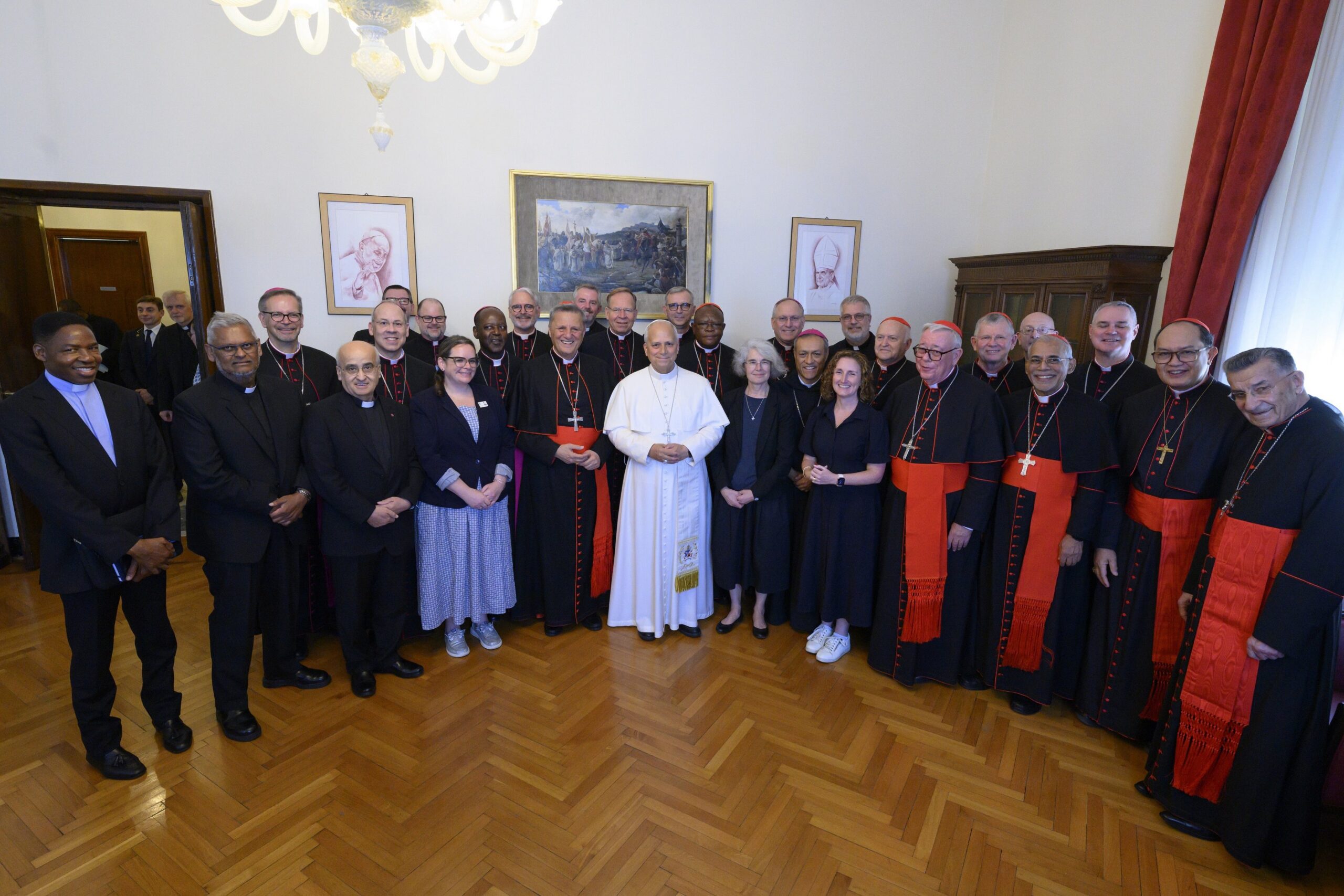
Pope Leo XIV poses for a photo with leaders of the “continental bodies” representing Latin America, Africa, Asia, Europe, Oceania, the Middle East and North America, together with the coordinators of the continental synodal teams, during a private meeting at the Vatican June 25, 2026. (CNS photo/Vatican Media)
One of the most common reactions I’ve received when asking someone in our diocese about the Synod is—“Yes, I’ve heard of it; what is it again?”
I need to make it clear that I support our Synod efforts in the Diocese of Knoxville. I was humbled to be chosen to represent our diocese along with our vicar general, Father Peter Iorio, at the Jubilee of Synod Delegates in Rome last October, and I now work faithfully to continue that mission as a member and leader of a very dedicated team of individuals—laity and clergy, men and women, Anglo and Hispanic, who make up our very small Diocesan Synod Team.
Five years ago, all of the faithful in the Diocese of Knoxville were called to participate in synodal dialogue sessions, both online and in-person, to help collect (listen to) your feelings on the direction, governance, successes, and failures of the Catholic Church. More than 4,200 people from parishes around the diocese participated.
The Catholic Church listened, and in 2024 it produced the Final Document of the XVI Ordinary General Assembly of the Synod of Bishops. This Final Document is THE guiding document to be used in the assemblies in the Diocese of Knoxville later this year. These assemblies will be attended by delegates selected by our bishop and your pastors—allowing them to listen, discern, pray, and discuss in synodal fashion how best to proceed—including carrying their ideas back to parishes for further discernment and discussion.
With all the seriousness I can muster, this is important. Pope Leo and Synod leaders in Rome have emphasized that five years into this process, we are no longer expressing our opinions.
We are now in what the Vatican calls the Implementation Phase of the Synod, which admittedly, involves a lot of discussion. But we are getting down to implementing in whatever iteration that turns out to be. Your delegates in September and November will engage in prayerful deliberation about the contents of the Vatican’s aforementioned Final Document and three guiding questions that have been offered by Bishop Mark Beckman to guide our discussions.
This is a significant undertaking and is not to be taken lightly.
The Synod—officially titled the Synod on Synodality—is a landmark moment in the life of the Catholic Church. Although synods and councils have been part of the Church’s governance and discernment for centuries—the Council of Jerusalem is an example—the 2023 General Assembly at the Vatican was the first Synod of Bishops assembly to include laymen and laywomen as full voting members. A second session followed in 2024.
What the diocese has been asked to do is being done in dioceses around the world, and as recently as late June, Pope Leo endorsed the synodal process once again and supported a plan that extends the synodal work of the Church into 2028.
It’s not likely to end there. The Holy Father told the College of Cardinals at the recent consistory that this synod initiative “is not, first and foremost, a set of procedures.” He called it “an attitude, an openness, and a willingness to understand.”
How much we, as faithful Catholics, come to understand what the Synod is about will take dedicated searching—not for something lost but for something that has been there since its inception—right before our eyes.