

Notre Dame parishioners assist in a variety of ways
By Emily Booker
Alma Vasquez was at her home in Chuckey, on the border of Greene and Washington counties, on the morning of Sept. 26. She had been planning to attend a funeral in Mountain City that afternoon. Although the morning was sunny, there were reports of rain and wind, and she was wondering if she would be able to make it to Mountain City. She would not.
“My children started calling me,” she said. “They were like, ‘Mom, you need to get out of the house, because there is a flood.’ And I was ike, why? Just look around. There’s nothing over here. I was not paying attention to anything.”
Ms. Vasquez, who is a program manager for Catholic Charities of East Tennessee’s Office of Immigrant Services, lives within a couple miles of the Nolichucky River. As Hurricane Helene battered western North Carolina, the waters poured over and down the mountains, causing quick, historic flooding in East Tennessee, especially along the Nolichucky. Though she couldn’t yet see it from her home, the river had spilled over its banks and was rising rapidly. Ms. Vasquez soon began receiving alerts on her phone saying those within two miles of the river needed to evacuate.
“I started looking at Facebook and seeing where bridges were coming down, and I was like, oh, this is serious,” she said.
Ms. Vasquez was like many in Greene County who were caught off guard by the severity of the flooding. The water levels rose quickly at two feet per hour. Around 1 p.m., the power went out at Ms. Vasquez’s home.
“We have no power, no water. I had a little battery on my phone—that was it. Once it went out, there was no way to charge it,” she recalled.
Water rushed over the Nolichucky Dam near Highway 70—at one point the dam took 1.2 million gallons per second, twice the force of Niagara Falls at its peak, according to the Tennessee Valley Authority. TVA estimated water levels reached eight feet over the previous record elevation. There were concerns that the dam, built in 1913, would fail, which would have caused catastrophic devastation as far downstream as Douglas Lake. Thankfully, the dam held.
Around 5 p.m., Ms. Vasquez could see the rising water from her house. By evening, it had crested and was already beginning to recede. It was then that she knew that she and her family were safe.
Others in Greene County were not so fortunate; dozens lost their homes along the river, and two men died in the flooding.
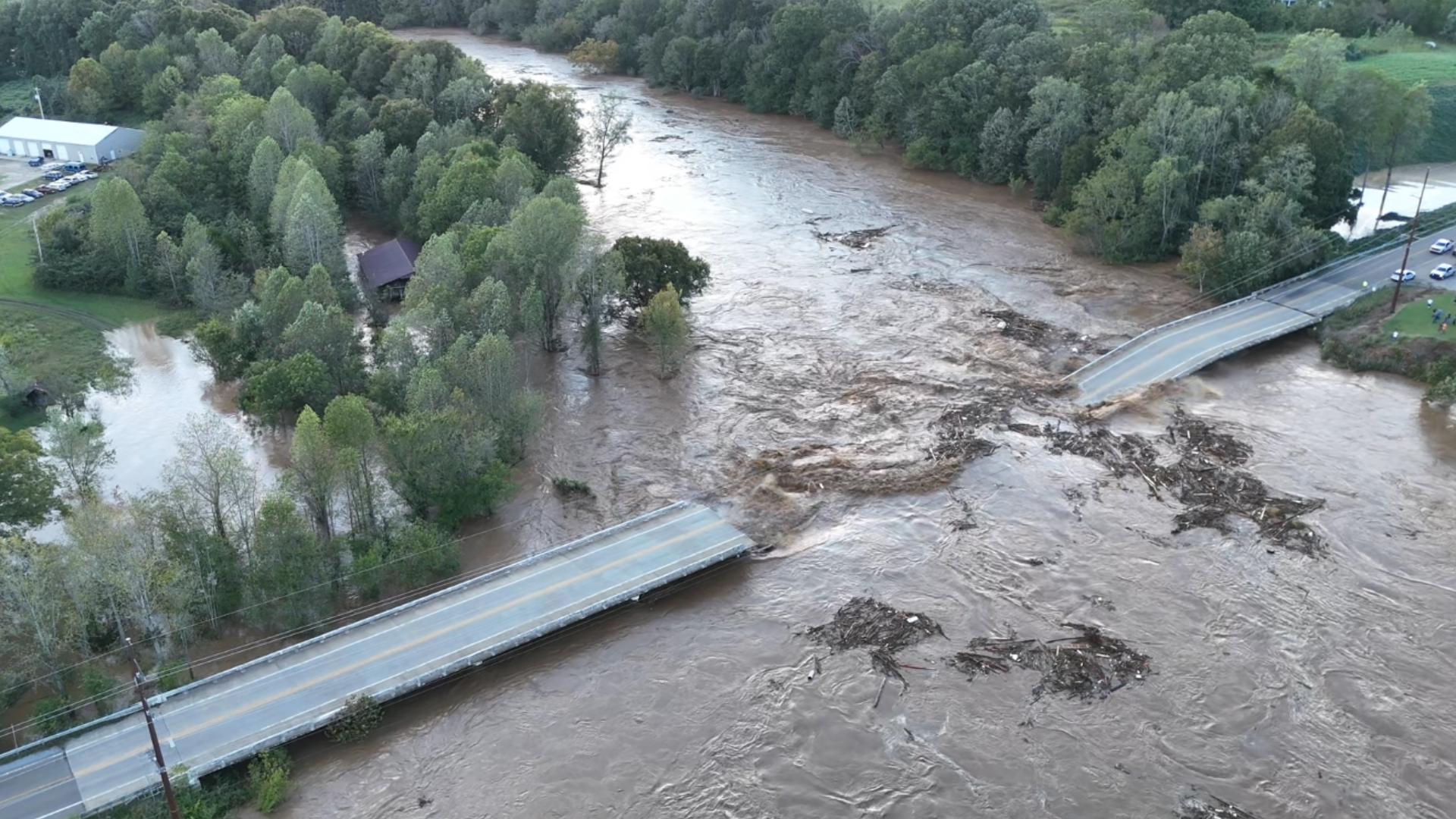
Historic flooding from Hurricane Helene rainfall swelled the Nolichucky River and washed away the Kinser Bridge in this Sept. 27 photo. The intense flooding redirected the river in places. (Photo courtesy Daniel Shrader)
But the disaster in Greene County also manifested in a broader way, affecting those who live far from the floodwaters. The flooding hit the infrastructure of power and water systems that most people take for granted every day.
Power was out for several days for thousands across the county.
Several bridges were overrun by the floodwaters. Some were washed away completely.
One of the washed-out bridges, Kinser Bridge on Highway 107, affected a major route into Greeneville.
With the strong flood waters hammering bridge structures, Greene County made the decision to close all the bridges in the county until each could be inspected for structural damage.
Ms. Vasquez was one of many “trapped” in her section of the county for several days, as all the bridges connecting it to other communities were either swept away or closed for damage inspection until traffic was allowed back on them.
“The Washington County sheriff referred to the area where I live as ‘the 107 island,’” Ms. Vasquez said. The number is a reference to Highway 107, which before the flood connected the communities of Tusculum and Afton in Greene County to Embreeville in Washington County and Erwin in Unicoi County.
While videos of the overrun dam and washed-out bridges drew considerable attention, the broadest impact across Greene County was the damage to the municipal water pumps, which pull and process water from the Nolichucky to tens of thousands of homes. It would take up to two weeks to get temporary pumps installed and a few more days beyond that before a boil advisory would be lifted.
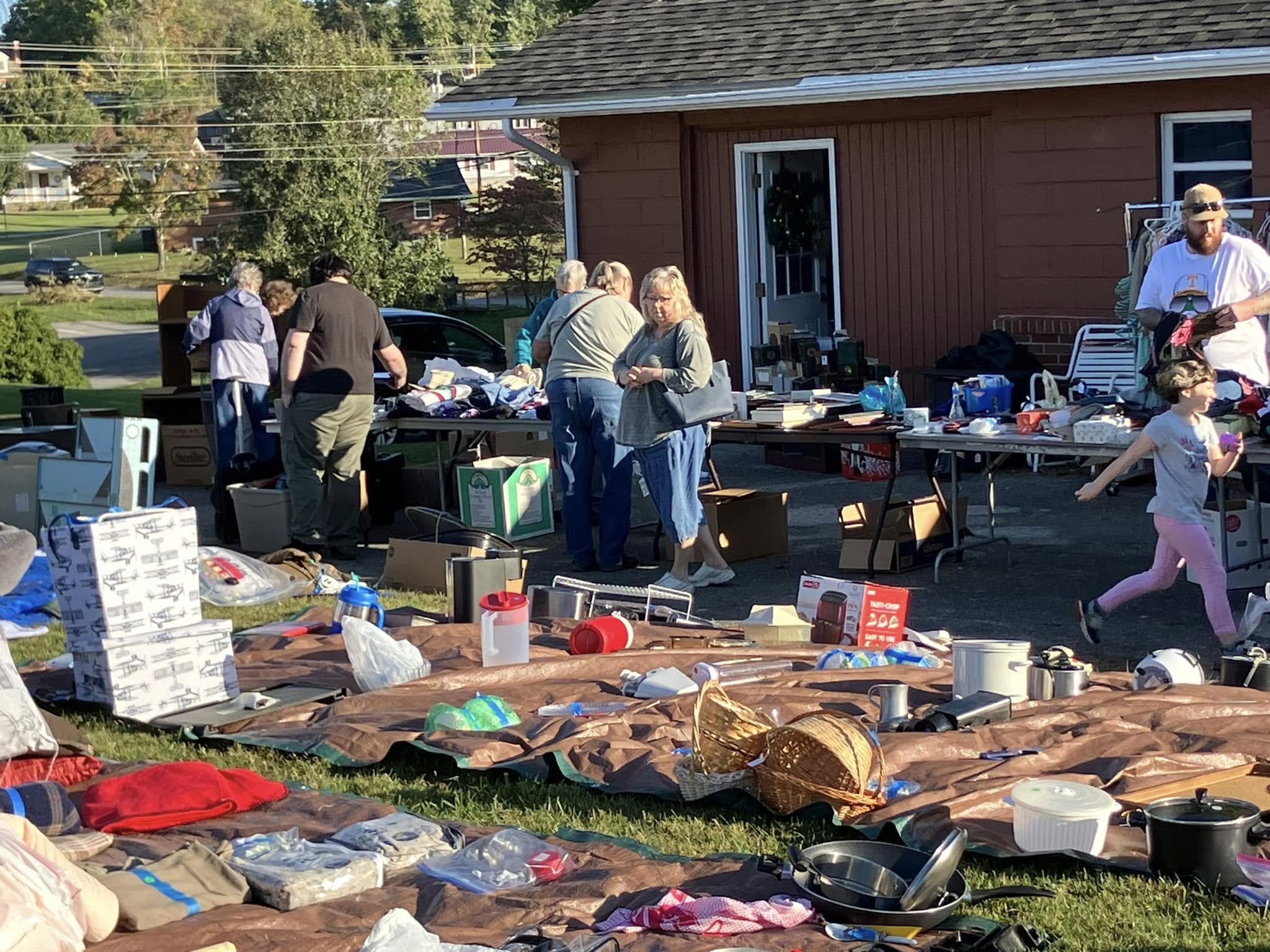
Notre Dame Parish displays a variety of items at its annual yard sale, which is usually held during its Festival of Nations but was postponed a week due to Hurricane Helene. The Sept. 28 festival was shut down when Greene County announced it was running out of water due to flood damage. (Photo courtesy Susan Collins)
From celebration to conservation
Notre Dame Parish in Greeneville was holding its Festival of Nations on the morning of Saturday, Sept. 28. The annual event is the parish’s biggest fundraiser and features booths of food from different countries represented in the parish along with games, music, and a yard sale.
The church still had power that morning, and except for parishioners like Ms. Vasquez, who couldn’t make it to town due to the bridges being closed, many people still attended the festival to check in on one another and try to rally some cheer.
However, only about an hour into the festival, city and county authorities announced the damage to the water pumps and that the county would run out of water in less than 24 hours. People were urged to conserve water, and businesses were closed.
The decision was made to close down the festival early.
“There was food left, lots of good food,” said parishioner Maggie Rowe. “So, we packaged up what we could, and I took it down to 911.”
The emergency-response office in Greeneville had been working around the clock, taking calls from people caught in the flooding or struggling without power. The office also was where several agencies were coordinating a response. Notre Dame parishioners took the dishes from the international booths and dropped them off for the 911 office workers.
“I thought, well, they’re stuck in their office over there; we’ll take them some food because they can’t leave. They’re the brain. They’re keeping everybody connected. They’re sending messages to the other departments. They’re orchestrating and keeping everybody informed.
“So, we took the food there, to 911. And they were very grateful. We got a nice thank-you note from them because they couldn’t leave their post,” Ms. Rowe said.
The next day, parishioners donated the packaged bake-sale items to first responders as well.
As the municipal water ran out that Sunday, tens of thousands of people faced a shared need. Basic tasks like washing, cooking, and flushing toilets required planning and resourcefulness. And no one was sure exactly how long it would take for temporary pumps to arrive and be installed. Local shelves of bottled water could not meet the need. Fortunately, water donations began arriving quickly, and churches, including Notre Dame, stepped up to make sure everyone had access to this vital resource.
“We set up a water distribution right here at the church,” said Father Joseph Kuzhupil, MSFS, pastor of Notre Dame.
Parishioners Joe and Elizabeth Dolan had a well on their property. They hauled tanks of well water to the church, where people could bring smaller containers and fill up. Once the church had its water restored, it offered its facilities for showers for those who needed it.
As the county restored water services, the immediate needs of water and food subsided, and the long-term needs of those who had lost their homes or jobs came to the forefront.
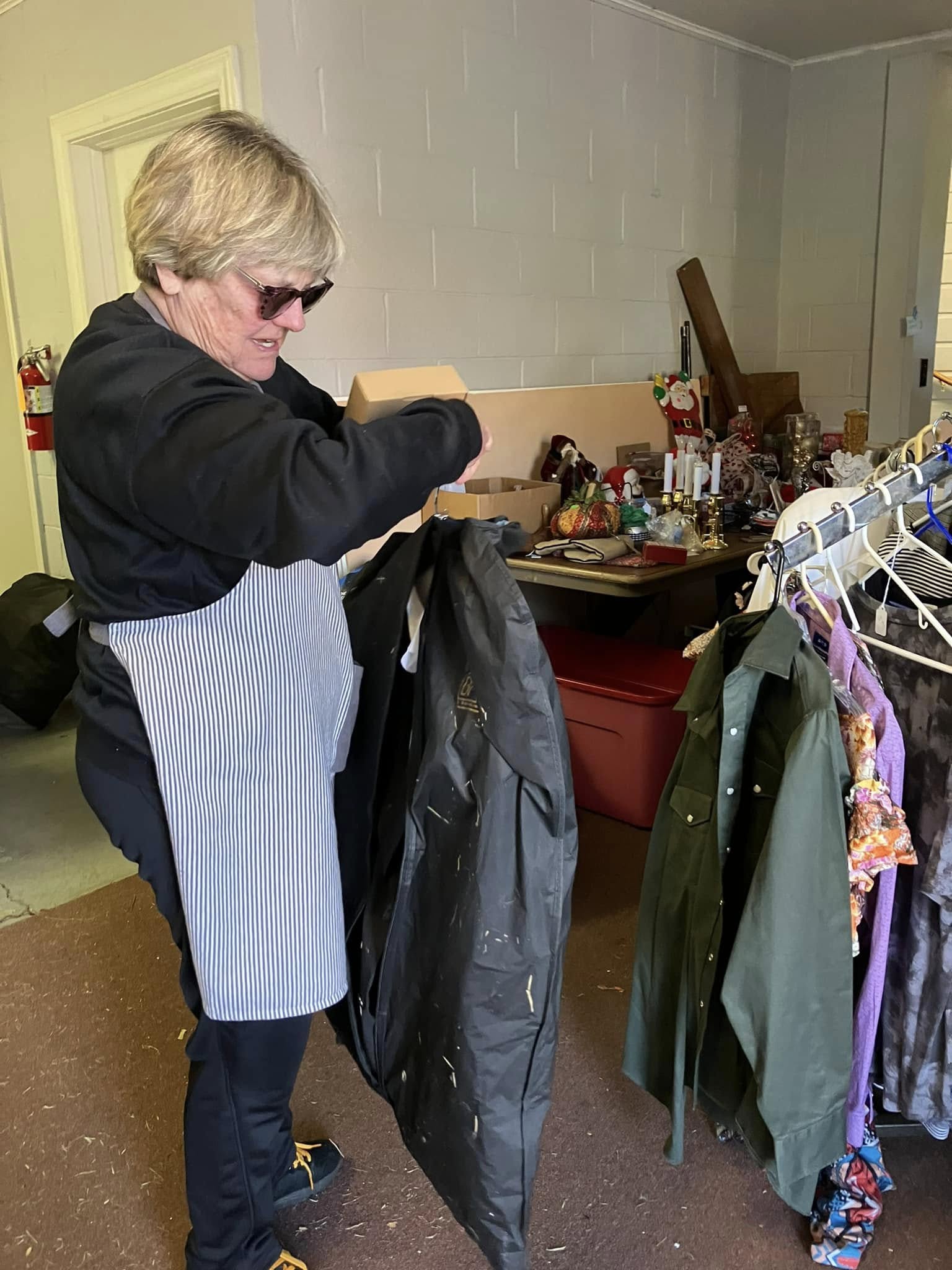
Rosemary Murphy, one of the yard-sale organizers, sorts clothes for the Notre Dame sale. Parishioners donated hundreds of gently-used items to the sale. (Photo courtesy Susan Collins)
Like other parishes across the Diocese of Knoxville, Notre Dame held a second collection to support Catholic Charities of East Tennessee, which was offering immediate relief and planning for long-term aid for those most affected.
“The parish matched the amount collected [from the second collection] and sent it to the disaster relief organized by the diocese,” Father Kuzhupil said.
Deacon David Duhamel, executive director of Catholic Charities of East Tennessee, noted the overwhelming, generous spirit parishes showed in responding to this disaster and the desire to help their neighbors.
“By the second week, people were mobilized and trying help out as much as they can,” Deacon Duhamel said. “And in that spirit of giving, the diocese saw record numbers of contributions for the relief effort.”
Since the Festival of Nations had shut down early, Notre Dame Parish still had all the items for its yard sale. The parish held its sale the following weekend, with the proceeds going to local disaster relief.
DJ Dalton, who was one of the organizers of the yard sale, also offered to match the money raised dollar for dollar. Together, the parish raised around $2,000 for AIDNET.
AIDNET is a unique program in Greene County that was ready to respond to the local disaster. It was founded in 2001 as a response after the county suffered terrible flooding. AIDNET activates in times of county-wide disasters to coordinate resources and monetary donations. It focuses on long-term recovery and the rebuilding of homes. Before Hurricane Helene, it was only activated one other time, in 2011, when tornadoes tore through the southern part of the county.
All of AIDNET’s funds stay in Greene County. Because of its local nature, AIDNET was able to connect to those in need quickly. It began rebuilding 10 homes on Nov. 12, just six weeks after the flood.
The parish also donated items from the yard sale directly.
“There were people who came to the yard sale who were taking truckloads of stuff up to North Carolina because they got hit pretty badly, too, in Asheville,” Ms. Dalton said. “We had some pieces of furniture and stuff, and we just let them load that up on their vehicles. We didn’t charge them for it to take to the flood victims. It was nice that we were able to give away so many of our items.”
On Oct. 10, the parish hosted a vaccine clinic in partnership with the Greene County Health Department to give hepatitis, tetanus, and flu vaccinations to those who needed them. Hepatitis and tetanus were particular concerns for those who were working to clear debris from the flood.
“I think our community did a great job, orchestrating together and taking care of our own,” Ms. Rowe said. “I think that’s what the beauty of it was. We do know how to take care of each other and offer whatever resources we have.”
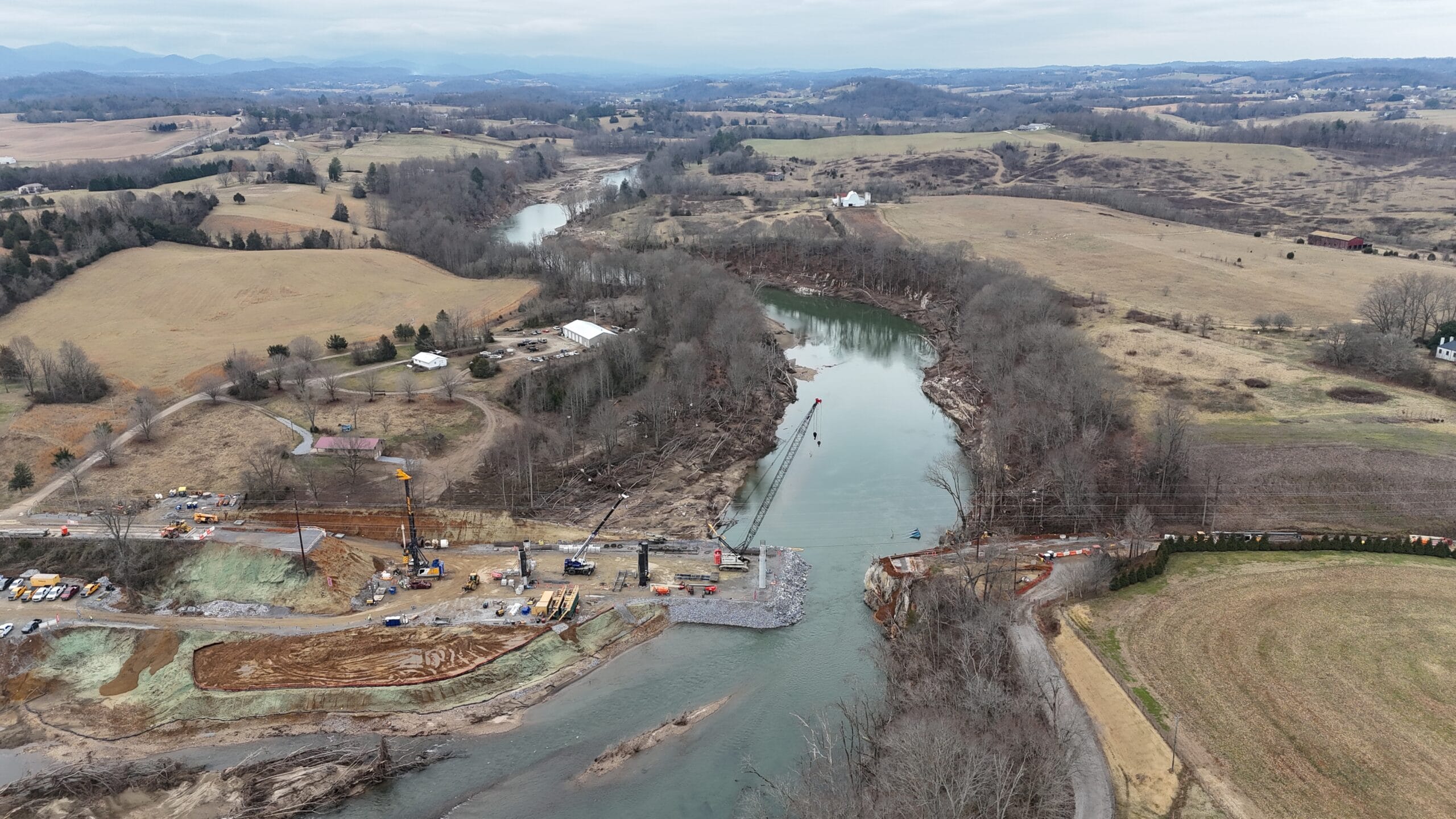
The Kinser Bridge over the Nolichucky River on Highway 107 in Greene County is being replaced in this December photo. (Photo courtesy Daniel Shrader)
Building back
Six months later, one can still see the damage of the powerful flooding along the banks of the Nolichucky. In some places, the course of the river has shifted several feet, taking away some people’s property while adding land to others.
As of March 18, AIDNET had 27 cases still open, working with families to rebuild their homes in Greene County.
Since Oct. 4, the county has been relying on temporary pumps to get water to homes. For the residents who live near the pumps, there is a constant hum of the diesel-fueled generators. Permanent pumps are expected to be installed sometime in the summer.
After some bridges were deemed safe in the week following the flood, residents of southern Greene County and the “107 island” have found new, longer commutes into town. Work on the damaged bridges and the ones that were swept away continues. Concrete beams for the new Kinser Bridge went in place in late March.
Ms. Vasquez can see bridge construction progress every morning on her way to work. She said the amount of slow-moving trucks, along with limited routes, has made her commute much longer.
“There’s construction everywhere, so you just have to have a lot of patience,” she said.
She noted that the construction work leaves a lot of mud in the area, laughing that she recently received a membership to a car wash.
“I was like, where is this mud coming from? Well, it’s from the trucks. It’s just not a little mud; it is like, a lot of mud. I realize it’s because of the trucks they have in a parking area near my house. When they come in and park and then they leave again, they leave all that mud there,” she said, describing the scene.
Ms. Vasquez has heard that the work on the major bridges is expected to be completed sometime between June and August.
“They’re working seven days a week, and they’re early, you know, they’re working early, and they’re working late. So, they’re working very hard. But I’m sure you know, it takes a long time,” she said.
And despite mud and longer commutes, she is thankful for how lucky she is to have made it through the disaster unscathed.
Sometimes after natural disasters, the attention and support can wane over time. But Notre Dame Parish has not stopped working to help its neighbors.
In the fall, as the weather started to turn cold, the parish collected three van loads of winter coats and baby supplies as well as two portable grills. The items were donated to migrant workers in Unicoi County whose work in the tomato fields was impacted by the flooding.

Young chefs at Notre Dame Church in Greeneville whip up some delights for a fundraiser breakfast as part of disaster-relief efforts. Notre Dame parishioners joined together in a variety of ways to lend assistance for those in Greene County in need following historic flooding last September. (Photos courtesy Andrea Pletsch)
In January, the parish held a fundraiser for disaster relief.
“We had a French toast, sausage, and pancake breakfast at the church,” said Andrea Pletsch, who, along with Elaine Janaskie, organized the fundraiser. “We did it as a free-will offering, and all of that money went to help flood-relief victims, those who were struggling to find food sources because they’re either homeless, living in tents, or living in motorhomes and needed stuff to keep them warm.”
The parish raised around $1,500, which was donated to Catholic Charities for its disaster relief efforts.
For many in Greene County, the disaster revealed the fragility of infrastructure and the importance of planning, coordination, and community.
Good engineering and strong craftsmanship ensured the Nolichucky Dam held.
Local authorities, from 911 responders to the police department to local government offices, worked hard to reach those most affected, open bridges safely and quickly, and get accurate information out to residents.
Churches used their networks and their physical spaces to coordinate water supplies and donations, as well as serve as places of prayer and connection.
AIDNET was able to activate and work with families to rebuild. Its reputation also offered a centralized, trusted place for locals to make donations, similar to how the faithful of the Diocese of Knoxville knew they could trust their donations with Catholic Charities of East Tennessee.
Preparing for the next need
Deacon Duhamel said that this disaster has shown the importance of disaster-response infrastructure and readiness for organizations like Catholic Charities. He is taking what he has learned from this and is preparing ways that CCETN can be even more prepared to help disaster-recovery efforts in the future.
Some ways CCETN is planning to build up its disaster response infrastructure is by developing a more robust volunteer program, expanding its mental-health services, and offering mental-health and first-aid classes and certifications in parishes.
“Our goal is to respond to the needs of our community, in whatever way that might be,” Deacon Duhamel said.
CCETN has received disaster-response funds from grants and Catholic Charities USA that will help the organization in future situations.
“Some of the money we received, we’re using those monies to invest in future capabilities,” Deacon Duhamel explained.
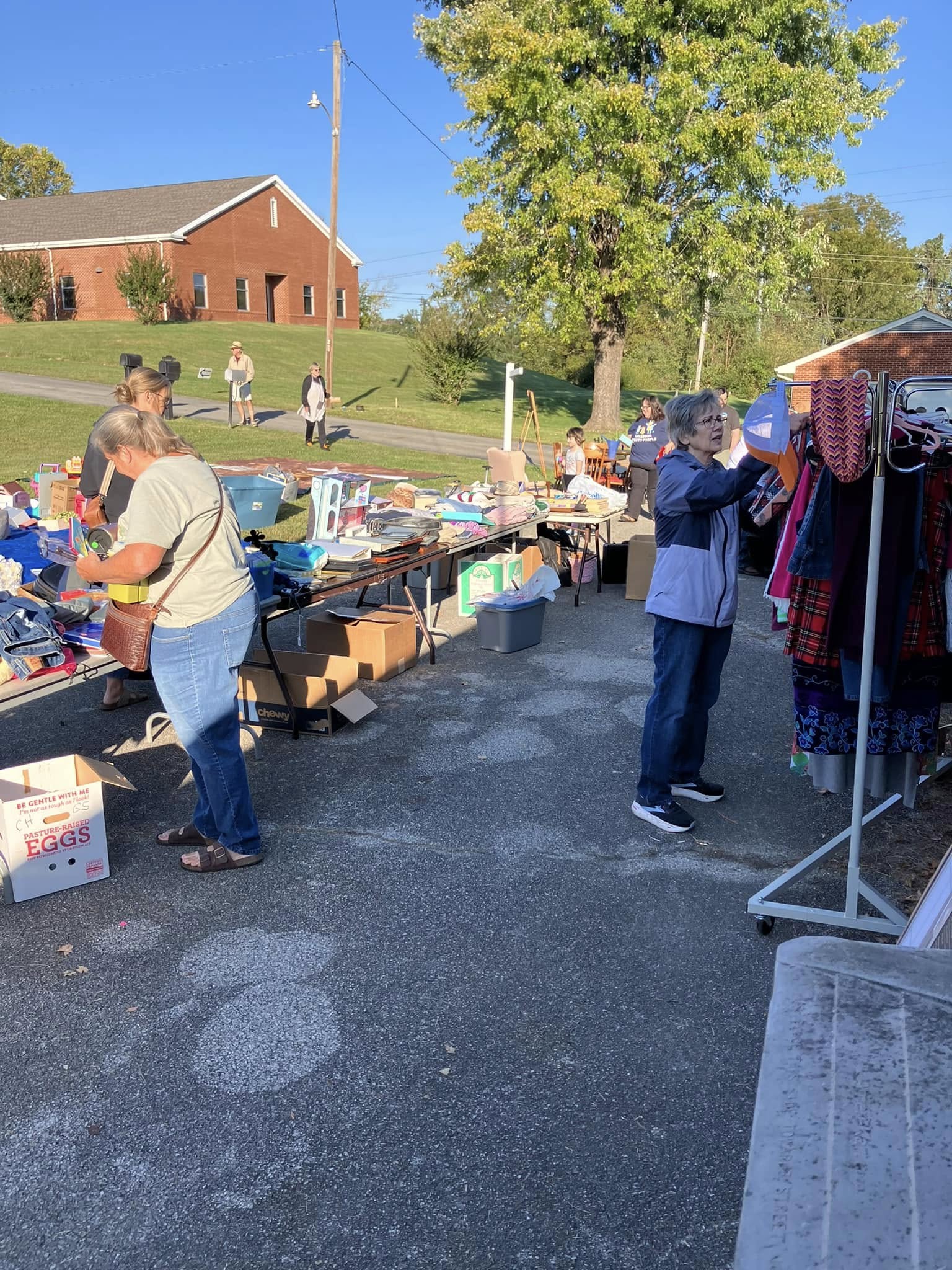
Shoppers browse items at Notre Dame Parish’s yard sale. Proceeds and leftover items from the sale went to Hurricane Helene flood relief. (Photo courtesy Susan Collins)
And like AIDNET’s is, Deacon Duhamel hopes CCETN disaster relief can be set up and ready to activate on a local, personal level whenever disaster strikes.
The disasters don’t have to be broad, affecting hundreds of thousands of people across multiple counties. CCETN disaster relief is organizing to help from individual house fires to 500-year floods.
Deacon Duhamel mentioned recent fires in East Tennessee, one in Cumberland County and one near the Georgia border. In both cases, CCETN was able to offer assistance immediately.
“Those are disasters to that family. They’re not very big disasters to the community as a whole. But they’re still disasters,” he said.
With the hiring of two disaster-relief managers, disaster relief is becoming a new area in which CCETN is reaching out to communities and helping those most in need.
“We now have this mentality of looking for disaster” rather than waiting to hear about one, Deacon Duhamel said. “We’re able to reach out to families and find out what they need and offer some limited assistance to them to help.”
As CCETN expands its services into disaster relief, Deacon Duhamel sees it as just another continuation of the organization’s mission.
“Our focus hasn’t changed. We’re still here to provide help and offer hope to our clients. This is just a new area. People come in dire need because of a specific event, and we now have that capacity. This aligns 100 percent with our mission here at Catholic Charities,” he explained.
Many Notre Dame parishioners expressed gratefulness for being spared a worse outcome. They were happy to support one another as bridges and water pumps were restored, and they rallied to lend aid to other communities affected.
They are already planning the next Festival of Nations for Sept. 20. And Ms. Dalton is looking forward to the next yard sale.
“There’s something about the yard sale that makes people happy,” she said. “To me, that’s the happiest part of the fall festival, the yard sale. Because everyone leaves with a big smile and a nice bag of goodies.”
Hopefully this year’s Festival of Nations will be a successful day of celebration, marking one year since the worst of natural disasters revealed the best of a community’s generosity.