
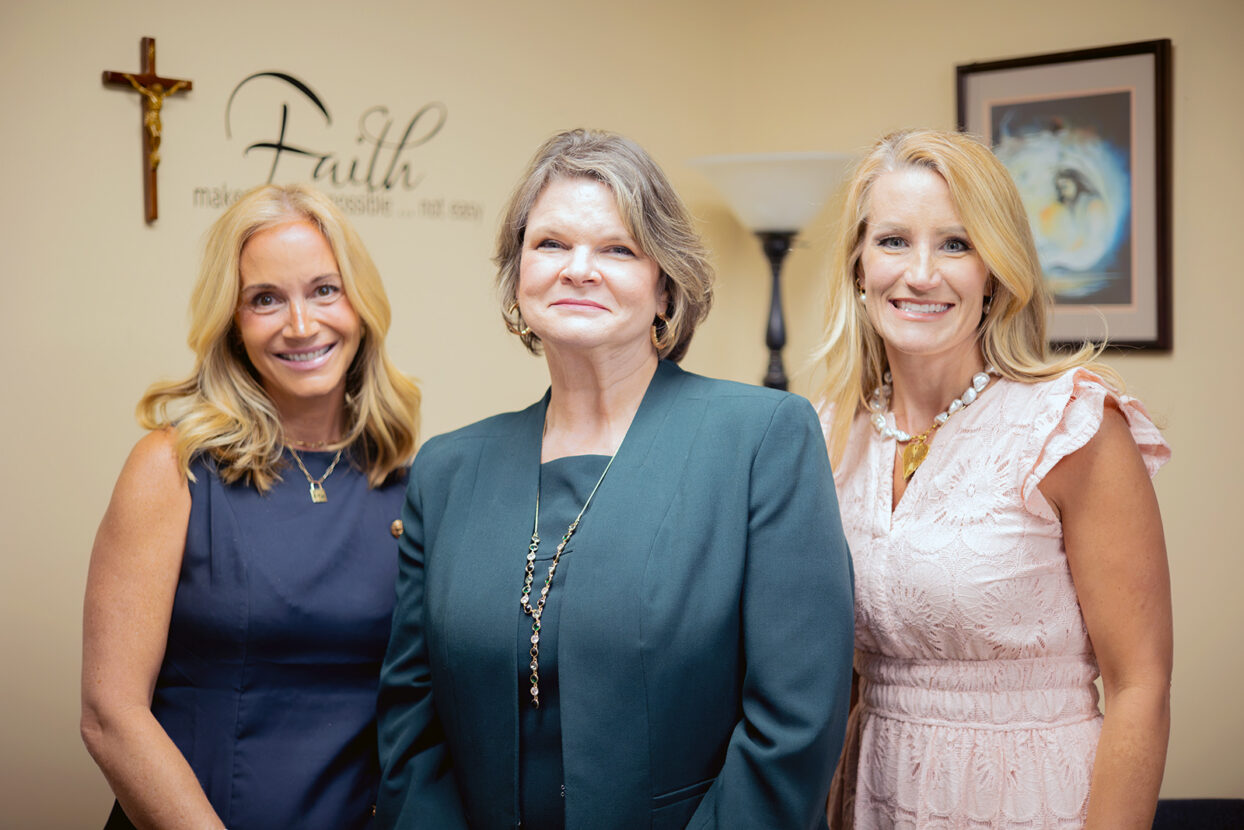
Diocesan Office of Catholic Schools reorganizes as reaccreditation approaches
By Bill Brewer
The 2026-27 academic year and a new superintendent are ushering in a reorganization of the Diocese of Knoxville’s Office of Catholic Schools.
The current year promises to be a challenging one as the schools office manages significant enrollment growth among the 10 diocesan campuses, ascending student test scores, faculty retention, growing demands for resources, and the reaccreditation of each school.
Superintendent Martha Mundine has announced new roles for herself and her assistants, Mary-Hannah MacCurdy and Rachael Leitner, to better serve the diocese and its schools.
“We’re refining our roles a little bit to better align with the national standards and benchmarks for effective Catholic schools, the four pillars: Catholic identity, governance and leadership, operational vitality, and academic excellence. Rachael is going to serve academic excellence. Mary-Hannah is going to serve operational vitality. I do governance and leadership as well as the other duties of the superintendent, and then Catholic identity is everybody,” Ms. Mundine explained, noting that everything the schools office does will align with those national standards and benchmarks.
She noted that the standards, benchmarks, and pillars have been established by the National Catholic Education Association (NCEA) to elevate the performances of Catholic schools in the United States.
And meeting that criteria will be vital in reaching the measures for accreditation in February.
“The NCEA started this years ago when we really didn’t have standards for Catholic education. We always had to supplement with something,” Ms. Mundine said. “But we always had accreditation standards through SACS or AdvancED, now Cognia.”
“There was never a good way to judge the effectiveness of Catholic schools. And so a team of people has been working long and hard for years on establishing this,” she pointed out. “And they have their rubrics to critique and measure yourself and your own school and figure out how it is. And that’s what we’re here to do: help our people and help our schools.”
According to Ms. Mundine, accreditation used to be based more on academics.
“More and more now it’s everything,” she said. “We are able to do that because of the way accreditation is built.”
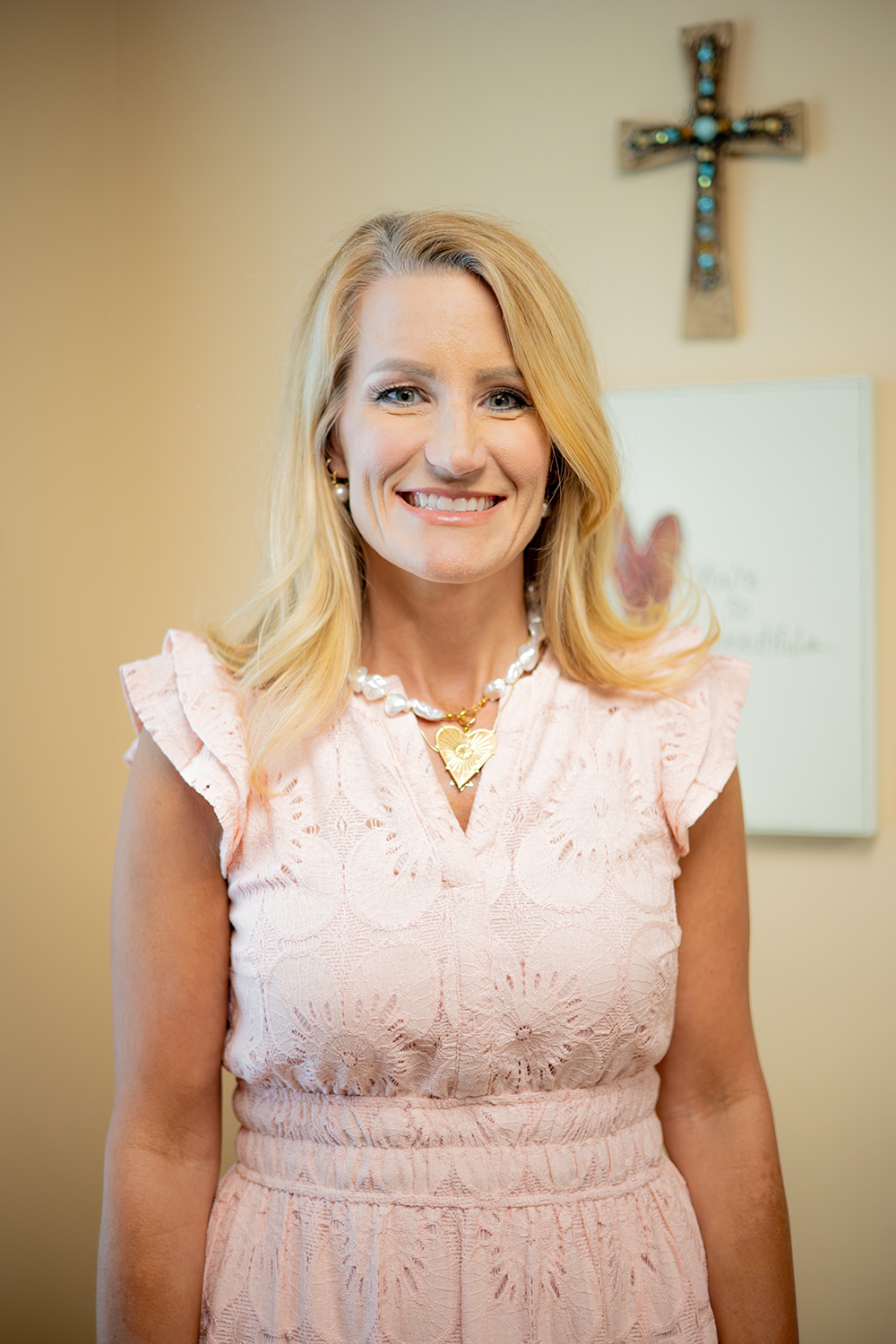
Rachael Leitner, who will oversee academic excellence and Catholic identity for the Diocese of Knoxville’s 10 schools.
As manager of the academic excellence pillar, Ms. Leitner is working with the schools to get all academic performance records in place.
Cognia representatives will visit the diocese in February over several days to review the school system’s performance.
Accreditation occurs every five years, Ms. Leitner noted.
“We’re always working toward it, and we want to always stay accredited, so the visit from Cognia is coming back up,” she said. “In aligning with those national standards and benchmarks, we are perpetually being sure that each of the schools meets the standards that are set forth.”
As the school year gets underway, Ms. Leitner and the schools office will be assembling evidence through surveys, evaluations, and campus visits to establish the grounds for accreditation.
“We’ll be ready to have all of our evidence whenever they come to visit,” Ms. Leitner said, pointing out that each school will be responsible for getting on board for the reaccreditation effort. “I’m looking forward to it.”
Ms. Mundine is familiar with the accreditation process, having served as deputy superintendent of schools for the Archdiocese of New Orleans and as a principal and teacher in three states during a Catholic education career of more than 30 years.
“As a district, every year we make sure we have schools that we focus on for their own reviews. And then every five years as a district, outsiders come in and visit us to make sure everything is in compliance. But every school has to have evidentiary pieces, and each year they do reports for what they’ve done and how they stand,” Ms. Mundine said.
Ms. MacCurdy is in her sixth year as development director for diocesan schools. And her new duties will be an extension of the role she has been performing—and will be more involved.
“When I was hired for this job originally, it was to do this type of thing, but this is more all-encompassing,” she said. “I will be working with the schools and looking at their enrollment trends, public relations, and marketing. I’m a liaison between our office and each school to communicate back and forth about their goals in terms of their fundraising and what they are doing for their annual funds and are they doing capital campaigns and what can we do to promote not one school but all schools.”
She will meet with the schools’ advancement directors and admissions directors, working with them to generate creative ways to expand the schools’ enrollment and fundraising efforts.
“Part of what I do in supervising operational vitality is to be like a cheerleader for all the schools,” Ms. MacCurdy said. “And then there is enrollment management, managing the different reports that say what we are doing in terms of enrollment and where we can improve in enrollment. Is marketing, whether by word of mouth or advertising, effective? Are we doing enough advertising? What are we doing or not doing that we need to look at?”
‘A collaborative partnership’
In promoting development for each school, Ms. MacCurdy is supportive of the individual identities each school community has established.
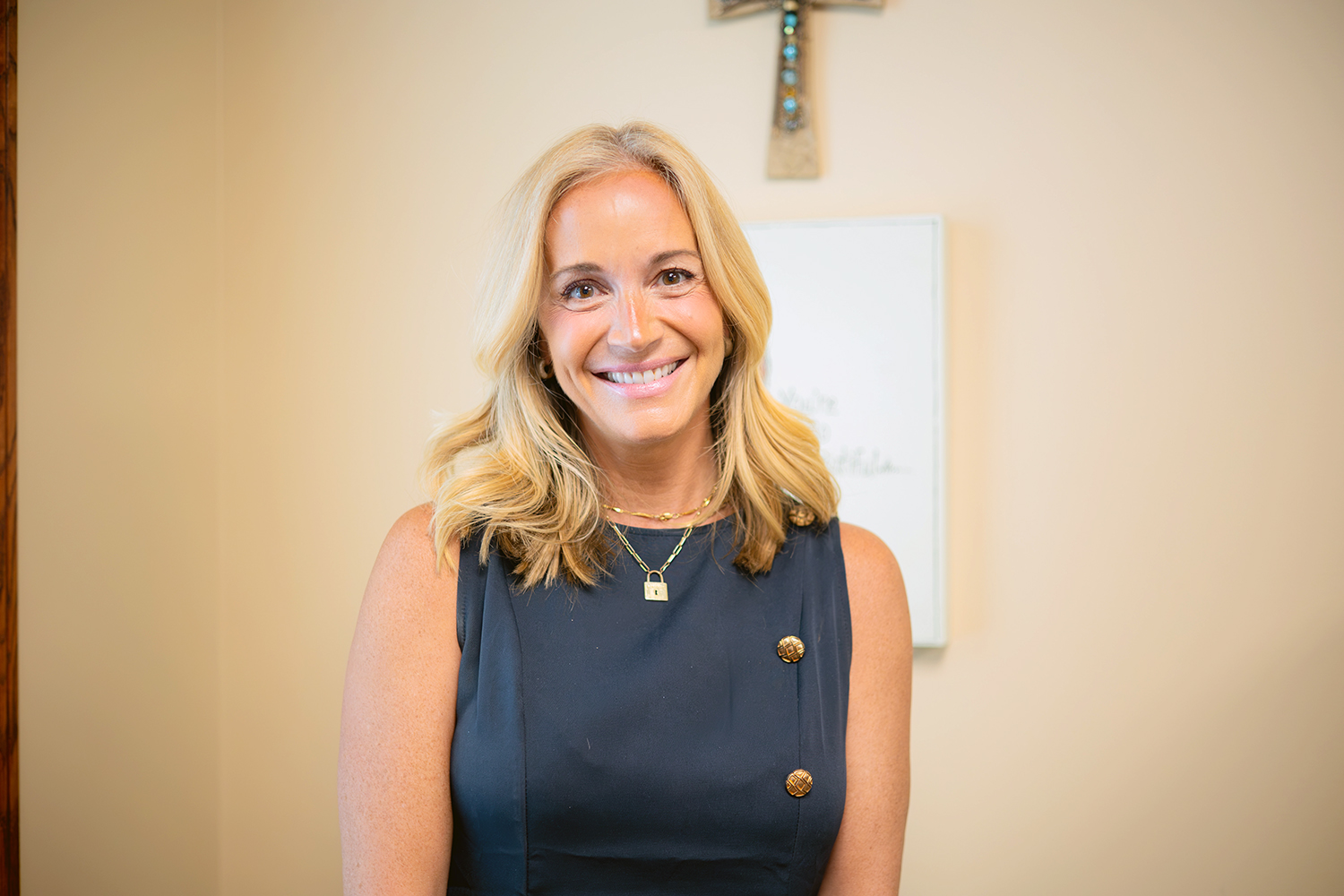
Mary-Hannah MacCurdy, who will oversee operational vitality and Catholic identity for the Diocese of Knoxville’s 10 schools.
“They all have their own unique way of doing things, and they all have their own culture, and we don’t want to take away from that. But we also want them to know that they have the support of the Chancery and the Catholic Schools Office in what they’re doing,” she said. “We work within their cultures.”
Ms. Mundine described the schools office as a “support system.”
Ms. Leitner pointed out that the schools office supports each school’s operational autonomy, from curriculum to development, and the standards and benchmarks, including the four pillars, respect that.
“We have the standards set in place of what is expected from a Catholic school. But then each school has the freedom to choose what the direction is for their students. This is a collaborative partnership,” she said.
Ms. Mundine, for example, cited the three schools in the Chattanooga Deanery.
“In Chattanooga alone, I think of the two elementary schools and the high school. Those two elementary schools are not cookie-cutter schools. They are very different, and we respect that. And we work for that,” Ms. Mundine said. “Everybody has their own Catholic identity, their own charism that we work with.”
“Our thing is establishing those foundations, what’s expected, of course, from Bishop (Mark) Beckman, what’s expected from legal standpoints, and helping them begin compliance,” she continued. “Again, they’re autonomous.”
Even as autonomy, identity, and individual culture are supported and encouraged, Ms. MacCurdy plans to initiate some diocesan-wide programs the schools can participate in as a group.
“We’re going to try to start bringing them together for certain things we all can do to promote school unity among all 10 schools, which I think would be a great goal for us and without losing their identities,” she said.
One example she gave is the annual Christmas card contest in which all the schools participate. Other ideas include a possible collaboration with the American Heart Association as well as the Catholic Church’s and the diocese’s emphasis on care of creation.
Ms. Mundine underscored the importance of data collection and interpretation by her office and sharing that information with the schools.
“It is the intentional examination of things we mentioned, looking at our test data and helping our administrators, helping our teachers and curriculum coordinators look at that data and make decisions for their own instruction, for their own professional development, and for their curriculum selections, things like that,” she shared.
She noted that Ms. Leitner and Ms. MacCurdy already have been collecting data to present to the schools, and coming up there will be a diocesan performance report of test data. However, the data will not be used to compare schools publicly.
“Anything we put out publicly will be diocesan data,” she said. “School leaders will know how their school is doing.”
Also planned are tools to assist school leaders with budgeting and resources.
Ms. Mundine said data tracking shows that test scores among the schools are consistently above the national averages.
“I would like everyone to know that Catholic schools in this diocese perform very well. I actually found out not too long ago that people don’t really know that,” she said.
‘A good time for Catholic education’
“And as far as enrollment trends? Wow!,” she added. “The enrollment trends are going up. This is a good time for Catholic education.”
So, why are enrollment trends rising among diocesan schools?
“There could be so many reasons. I know that the Catholic Church is growing in this area. So, that could be a large part of it. Just belonging to the Catholic Church,” she continued.
The NCEA has performed studies on why parents are choosing Catholic education for their children. Catholicism and faith are on the list, but not at the top.
“It’s safety and academics,” Ms. Mundine said. “Faith is in there somewhere. But once they are in, it will all be based on faith.”
Tennessee’s Education Freedom Scholarships, commonly referred to as school vouchers, also are a major factor, she pointed out.
“Those have had a large impact on making Catholic education affordable for more students,” she said. “And affordability has always been a bump in the road for Catholic schools.”
Ms. Mundine pointed to the Education Freedom Scholarships and a similar program the federal government is introducing early next year—the Education Freedom Tax Credit—as important reasons Catholic schools are able to manage the expensive and rising costs of education while attracting record numbers of students.
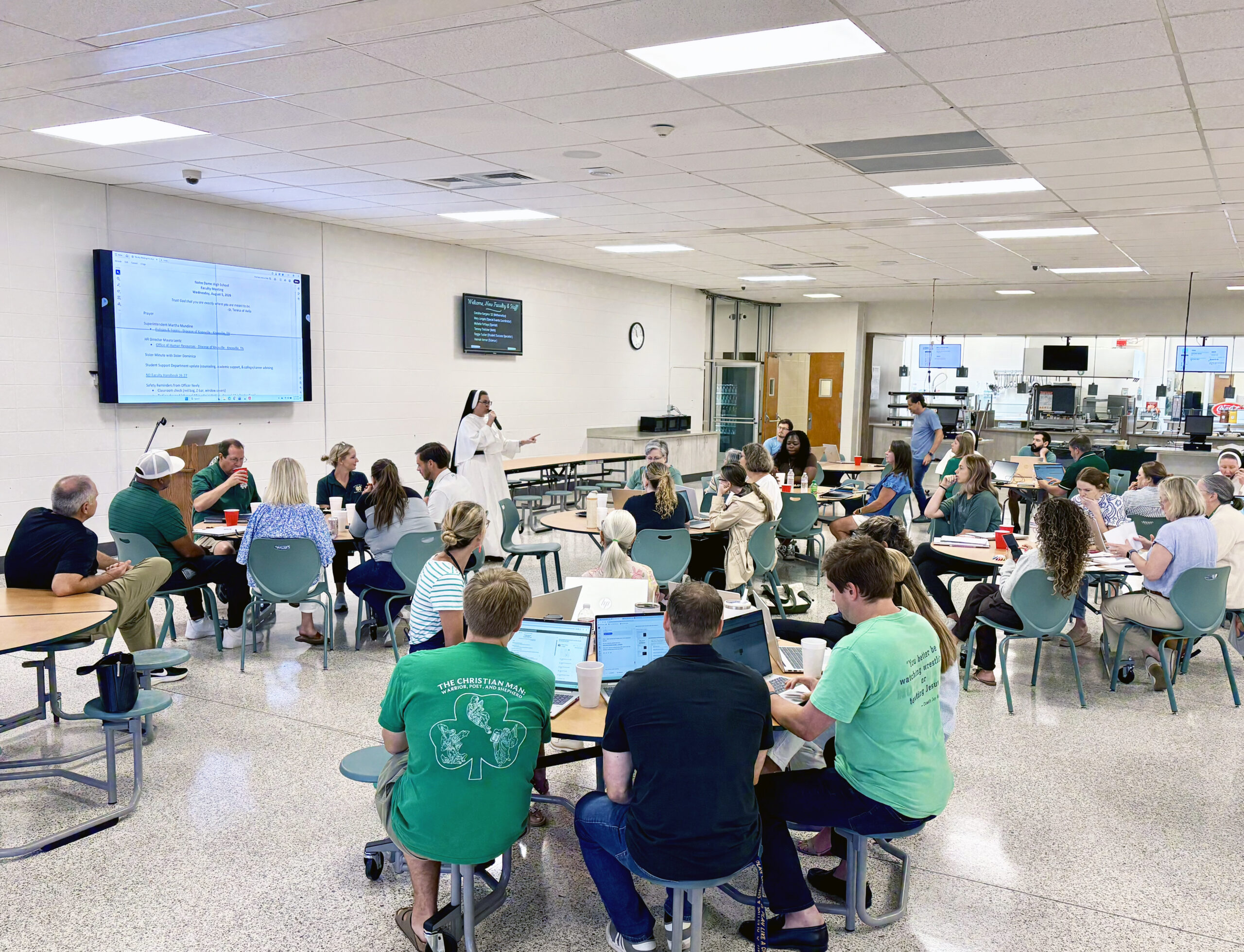
Sister Dominica Bickerton, OP, who teaches English at Notre Dame High School, addresses students on the first day of class, which was Aug. 6. (Photo Cleo Gravitt/Notre Dame High School)
Enrollment in Diocese of Knoxville schools across the board was up last year, and that trend is continuing this year.
Schools are reporting waiting lists to enroll and classes that are at or near capacity.
Ms. Mundine said that it will be important for schools to balance enrollment, classroom sizes, the number of classrooms, and the number of teachers on staff, and the schools office will be in a position to assist with the information it collects and analyzes, and the reports it can offer.
As administrators look to balance their budgets based on enrollment trends, staffing size, and resource needs, they also must be mindful that the governor and state legislature control the Education Freedom Scholarship program and the president and Congress influence the Education Freedom Tax Credit. And changes in politics can affect whether those programs continue.
“They (Catholic school administrators) have to look at their own trends. You can’t go building new classrooms and hiring new teachers based on one bump. We have to remember the priority of acceptance. We are here to serve our Catholic community first,” Ms. Mundine said.
She stressed that all are welcome to a Catholic education, and the goal is to evangelize to everyone.
“We want to offer that opportunity to anybody who wants a Catholic education. It doesn’t matter what religion you are, what faith you practice. But we have to look at those things. So yes, that makes for a big challenge,” she noted.
Ms. MacCurdy and Ms. Leitner pointed to how unworkable it becomes to irresponsibly add students, teachers, or classrooms because of the costs to educate.
“If you’re doing that, how are you affording it?” Ms. Mundine interjected. “And at the same time, we don’t want to have avenues to make it more accessible and affordable for some that qualify but drive up the price for others who are paying for that. That is why we appreciate the vouchers and the upcoming tax-credit program that will be in place but will not drive up tuition for other people.”
Ms. Mundine is impressed that tuition assistance offered by diocesan schools does not come from the operating budgets of the schools.
All of that makes strategic planning critical.
“So, yes, we are here to help figure out strategic planning and how we can move forward. That’s also part of that governance and leadership piece. It’s always a formula that you’re trying to figure out all the time. It’s all about data and consistency in the data.”
As the schools office implements its new duties, Ms. Mundine, Ms. MacCurdy, and Ms. Leitner said it is important for the schools to know they are advocates for the schools.
“We’re their advocate in all that they are doing. We are here to support them. Martha has been very empowering to us in the office and also to our school leaders. I think they are really going to appreciate that,” Ms. MacCurdy said.
The Diocese of Knoxville Office of Catholic Schools is excited about the academic year and what lies ahead. And Ms. Mundine, Ms. MacCurdy, and Ms. Leitner are looking forward to their interactions with the schools and their faculties.
After all, everyone involved in the diocesan schools has the same goal: teaching the Catholic faith and academic success.
“We are mission-oriented, and that’s our goal—to raise disciples and accompany people to Jesus Christ. We haven’t taken our eyes off the mission,” Ms. Mundine said.