
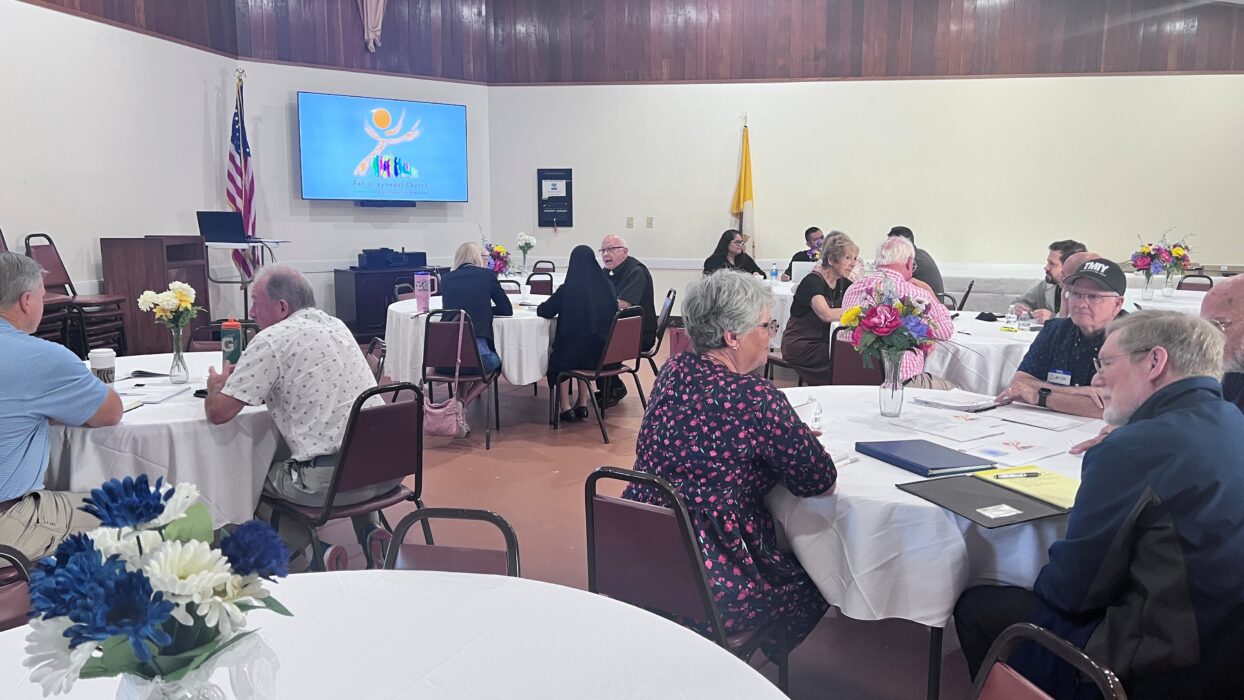
Delegates from across the Diocese of Knoxville call on the Holy Spirit for guidance
By Jim Wogan
For a few years now, Church leaders in Rome—including, not unimportantly, two popes—have been asking dioceses around the world to embrace the concept of synodality and to seek guidance from the Holy Spirit as they discern how to live it out.
“The Spirit, whom the Father sends in Jesus’ name and who teaches everything, guides believers in every age into all the truth.”
That line, based on holy Scripture, comes directly from the Final Document of the XVI General Assembly of the Synod of Bishops, held at the Vatican in 2024. It appears in a section titled “Ecclesial Discernment for Mission,” where the document explains why the Church believes we, the people of God, can discern together: because the Holy Spirit speaks to all of us.
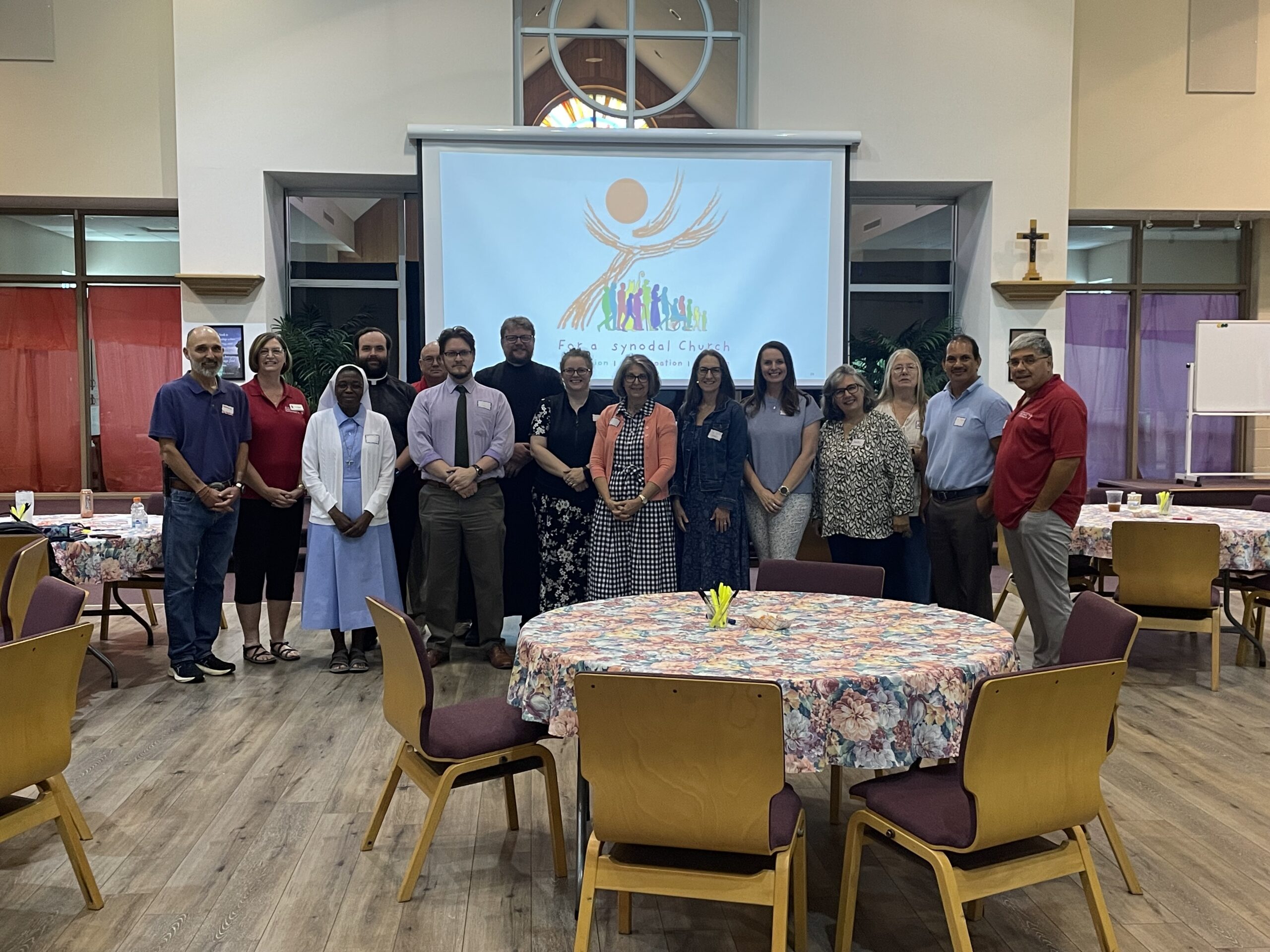
Synod delegates in the Cumberland Mountain Deanery meet at St. Alphonsus Church on Sept. 19. (Photo courtesy Terry Paradas)
Understanding the Holy Spirit’s role in guiding synodality is not simply a theological idea being discussed in Rome. It is finding its way into the life of our own diocese.
On Saturday, Sept. 19, delegates from the Diocese of Knoxville came together at four deanery gatherings to learn about and experience what synodality can be.
The gatherings, hosted by St. Alphonsus Parish, Crossville; St. Jude Parish, Chattanooga; St. Mary Parish, Johnson City; and the Cathedral of the Most Sacred Heart of Jesus Parish, Knoxville, brought together pastors, deacons, members of religious orders, and laypeople appointed by their pastors.
The daylong journey was divided into two parts. The morning session asked delegates to “enter the synodal journey” by considering it as a way to “dialogue, discern, and decide.”
The afternoon session put the synodal concept into practice by returning to three “guiding questions” previously offered by Bishop Mark Beckman: How can we build stronger communities? How can we foster a more collaborative relationship between laity and clergy? And how can we recognize our shared responsibility for all of God’s creation?
Delegates navigated their small-group conversations using the “Conversation in the Spirit” method, a practice that encourages participants to listen, pray, and engage in silent discernment before sharing their thoughts on a particular topic.
Near the end of the day, the groups shared those thoughts with the entire room, speaking about what moved them, what challenged them, what inspired them, and what concerned them.
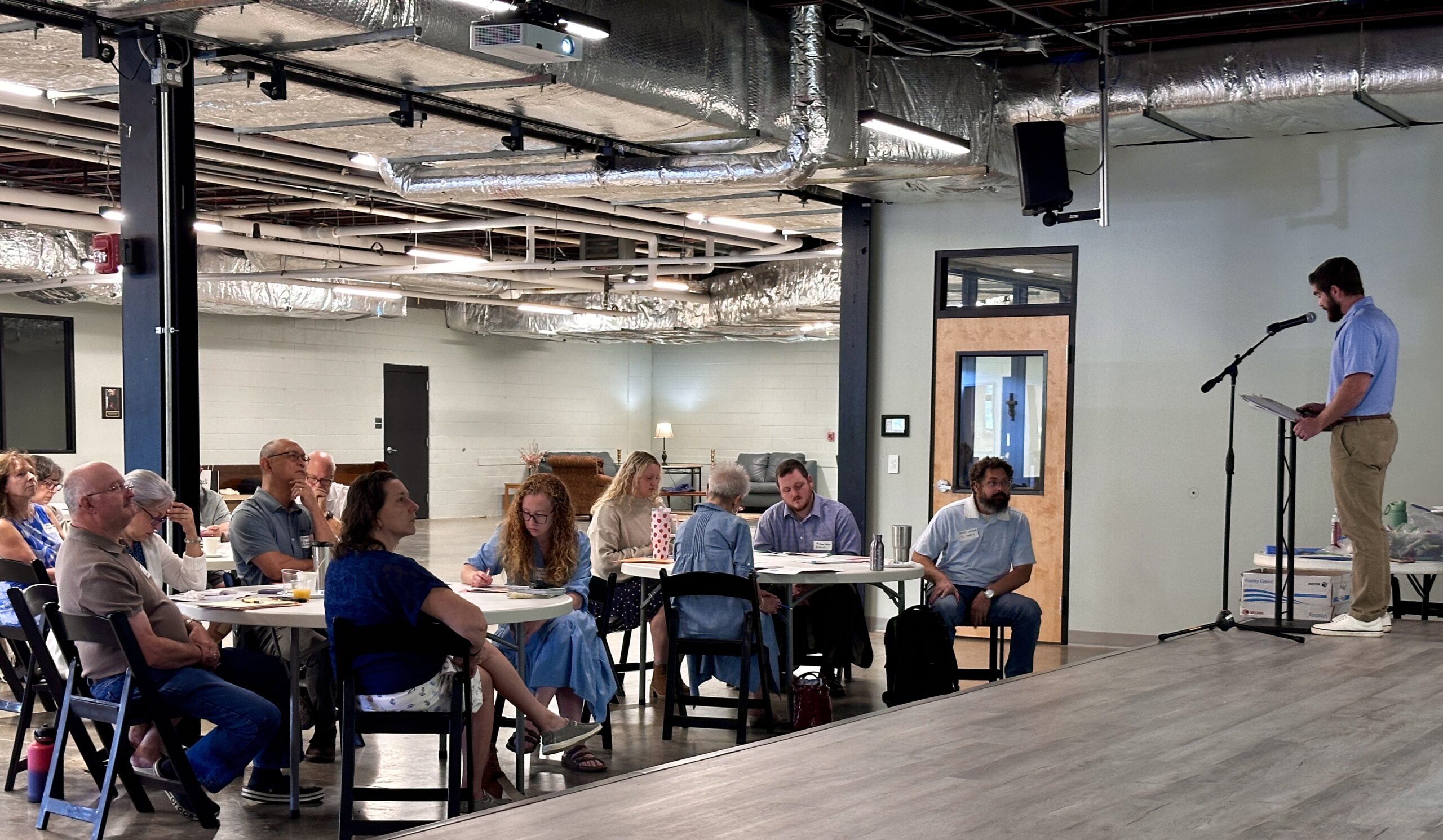
Delegates in the Five Rivers Deanery gather on Sept. 19 at St. Mary Church in Johnson City to work on the diocesan Synod phase. (Photo Hannah Houtari)
The work of the delegates was not just a matter of discussion for discussion’s sake. They were practicing a different way of being Church—listening to one another, making room for prayer and silence, and resisting the urge to rush toward answers.
The goal at this stage was not necessarily to produce solutions but to learn how to listen and discern together.
Before leaving for the day, the delegates were encouraged to pray about their synodal experience and continue discerning what they had heard and experienced. There were no solutions to present or conversations to report publicly. Those who wished were encouraged to bring their thoughts and ideas to a diocesan-wide gathering of parish delegates on Nov. 14 at Sacred Heart Cathedral.
So, as a diocesan family, we continue to participate earnestly and faithfully in a global journey initiated by Pope Francis in 2021 and now carried forward under Pope Leo XIV.
The journey is intended to change something—but not to create a different Church. It asks us instead to consider whether we can become a Church that listens more deeply, discerns more patiently, and shares responsibility more fully.
As recently as June 23, Cardinal Mario Grech, secretary general of the Synod and a key adviser to Pope Leo XIV, said, “The synodal journey is not aimed at occupying institutional spaces or redefining balances of power, but at generating dynamics of listening, discernment, and co-responsibility that, over time, transform the Church from within.”
Cardinal Grech’s phrase “transform the Church from within” will sound unsettling to anyone who hears it as a call to change what the Church believes or who holds authority. But the Final Document describes something different. Synodality is presented not as a replacement for the Church’s structure or teaching, but as a way of living more fully the communion, participation, and mission that already belong to the Church.
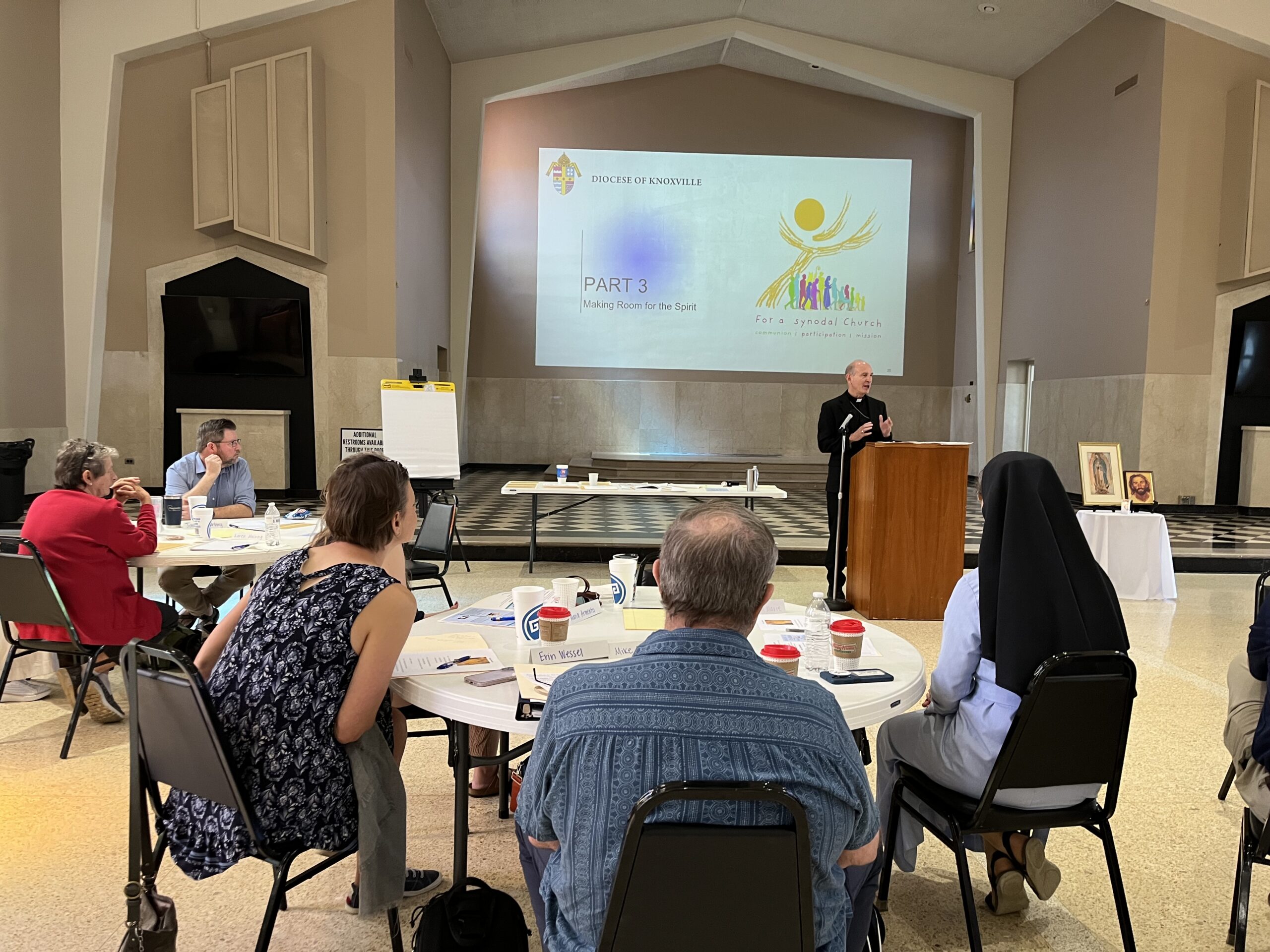
Bishop Mark Beckman speaks to the Smoky Mountain Deanery delegates on Sept. 19 in Cathedral Hall at the Cathedral of the Most Sacred Heart of Jesus. (Photo Blanca Primm)
Cardinal Grech is telling us that synodality does not set aside the Church’s tradition, teaching, or authority. Instead, it asks us to consider how we live and exercise those together. Pope Leo XIV also emphasized this in a June 26 address to cardinals at the Vatican:
“Synodality is not, first and foremost, a set of procedures; as I have said on several occasions, synodality is an attitude, an openness, a willingness to understand.
“At times it (synodality) has been interpreted as a diminishment of authority. In reality, it helps us to understand more deeply the meaning of authority itself, which exists to safeguard communion, to foster the participation of all, and to guide the Church’s common journey.”
Jim Wogan, who is a former communications director for the Diocese of Knoxville, currently serves as the diocesan Synod Team leader. He and his wife, Mary, are members of St. Thomas the Apostle Parish in Lenoir City.