
Prayers (but not all of them) are vital elements in the Mass liturgy
By Bishop Mark Beckman
Having recently celebrated the feast of the Archangels (Sts. Michael, Raphael, and Gabriel) and the feast of the Guardian Angels, I am reminded once again of the great care God has for us in sending his messengers among us.
Since the second grade, when a wonderful Sister of Mercy taught us the Prayer to Your Guardian Angel (she had a statue of an angel on her desk that she said represented her guardian angel!), I have been grateful for the care of God in giving us an angel to accompany us on the path of life “to light, to guard, to rule, and guide.”
As St. Gregory the Great reminds us in the Office of Readings, archangels have a key role of prominence in God’s providential care for they are entrusted with the greatest of missions.
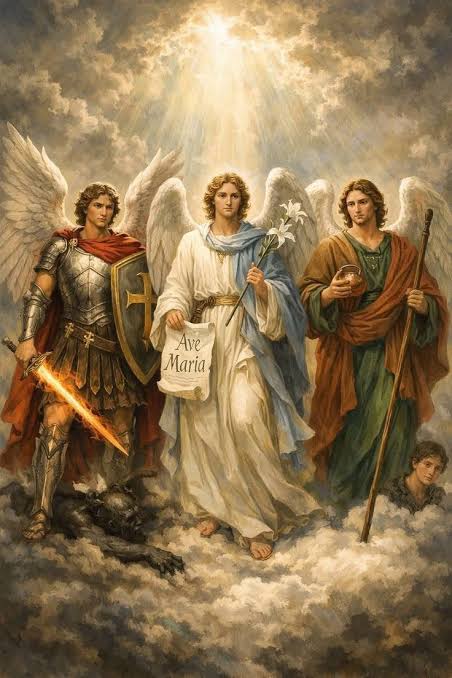 Pope Leo XIII composed the original Prayer to St. Michael in 1886 and had a shorter form officially recited after every “low Mass” at that time, along with other prayers that included three Hail Marys, the Hail Holy Queen, and a prayer for the Church. During the reform of the liturgy called for by the council fathers during the Second Vatican Council, one of the underlying principles of the reform was to restore “a noble simplicity” to the Roman Rite.
Under the authority of St. Paul VI, the revised liturgy promulgated in 1964 removed the so called “Leonine” prayers including the Prayer to St. Michael as part of the liturgy. The current Roman Missal is indeed marked by a return to the noble simplicity of the Roman Rite that showed more clearly the character and connection of the different parts and facilitated the “devout and active participation of the faithful.”
As I have traveled throughout the Diocese of Knoxville, I have noticed that in some of our parishes additional prayers, including the Prayer to St. Michael, the “Prayer of St. Francis,” a Prayer to the Holy Spirit, and others have been added regularly to the liturgy—recited together, sometimes before the entrance hymn, or immediately after the dismissal.
Recently at a gathering of our priests I spoke to these customs that have become part of some of our parishes, many of which are indeed beloved by our people. Having reflected on the importance of celebrating the liturgy in accordance with the mind of the Church, I do not think it appropriate to add additional prayers associated with the celebration of the Mass itself. Therefore, I have asked our priests to catechize the people of God as we move away from additional prayers recited together immediately before, during, and immediately after Mass.
I know that change is often difficult, especially when particular prayers are loved and have become customary. The regular addition of prayers to the liturgy, to my mind, is ultimately the decision of the Holy Father and something that pastors should not permit on their own.
Many of these prayers, including the Prayer to St. Michael, are a very important part of the treasury of prayer that has come down to us in the Church. St. John Paul II encouraged the faithful to pray the St. Michael Prayer as part of the life of devotion, and Pope Francis specifically encouraged its use at the end of the rosary.
I encourage our pastors and indeed all the faithful to find ways to incorporate these beautiful prayers into the devotional lives of our families and communities beyond the celebration of the liturgy.
Reflecting on the great wisdom of the Church in celebrating together the archangels, in our world today we do indeed need the ongoing protection of St. Michael, we need the healing remedy of St. Raphael, and we need especially the Good News announced by St. Gabriel of the coming of the Messiah who has conquered sin and death by the power of His cross and resurrection and opened for us the way to eternal life.
We thank God for this infinite gift and are especially mindful of the care of His angels sent to guard us on the way. It is chiefly at life’s end when we trust most importantly in the care of our guardian angels to guide us safely to the kingdom of heaven.
Comments 31
Speaking of the mind of the church, I hope Bp. Beckman is equally vigilant for priests who regularly ad lib various prayers of the Mass itself.
What are you afraid of, Bishop?
With all due respect, big mistake Bishop. The fact is, for better or worse, saying the St. Michael Prayer at the end of Mass is the only time many among the faithful are exposed to it. I am a very devout convert, with a devoted prayer routine, that includes the St. Michael Prayer. Not every Catholic out there is that devoted, and many add little to their prayer life outside of Mass. Our parish prays the St. Michael at the end of Daily Mass. A neighboring parish says at the end of all Masses. Both priests at that parish are young and on fire. For the record we are outside of your diocese.
Gloria Deo,
Joe Allen
Ad Majorem Dei Gloriam
Beautiful.
No one has authority to stop us praying as long as we don’t disturb the Mass.
The St. Michael’s Prayer has been traditionally said after the priest leaves the altar.
My wife is a convert and she keeps my faith strong too.
God bless you always.
If the Bishop knew that “change is difficult,” then why change and remove the prayers after mass? St. Michael probably enjoys hearing from Catholics after mass and I’m sure St. Francis appreciates prayers to him.
Interesting. Does this also mean we should not pray the Rosary immediately before Mass? And if the Prayer to St. Michael is done AFTER the dismissal, wouldn’t Mass be over? If so, the prayer would not be part of the liturgy.
Good point!
Exactly.
Question for clarity… Is the issue the inclusion of the prayers immediately after Mass? I know many parishes include the prayers before the recessional.
Would they be appropriate after the recessional for those who wish to recite them together?
The Recessional is not part of the Mass. The Mass ends with Go in Peace, etc.
With all due respect and even though I do have a theological problem with the prayer to St. Michael being said right after Mass, it is after Mass. It is not part of the liturgy.
Devotional prayers are the prayers of the people of God and should not be squashed.
My concern about the prayer of St. Michael right after Mass is that I think we can forget the power of the Holy Sacrifice of the Mass against the evil one. We can tend to make the St. Michael Prayer almost more powerful than the Mass without intending to.
However, after Mass is after Mass.
Bishop no disrespect but I think you are wrong. I say the prayer to St Michael everyday and also to my guardian Angel. God Bless
With all due respect to Bishop Beckman, I believe discontinuing the communal recitation of the Prayer to St. Michael after Mass would be a regrettable decision.
I understand the importance of preserving the integrity of the liturgy. But praying this beloved prayer after the dismissal does not change the Mass itself. Rather, it offers the faithful a powerful reminder that our spiritual responsibilities do not end when we leave the church.
Pope Leo XIII introduced this prayer in 1886, recognizing the reality of spiritual warfare. St. John Paul II encouraged Catholics to pray it, and Pope Francis likewise urged the faithful to invoke St. Michael’s protection. Their encouragement reflects a timeless truth: evil is real, and we must remain vigilant in our faith.
In a world marked by violence, moral confusion, and growing hostility toward Christianity, why would we discourage a prayer asking God for protection against evil?
St. Michael does not replace Christ. He serves God, defending the faithful against the forces of evil. Reciting this prayer together unites Catholics across generations and reminds us that we do not face these spiritual battles alone.
Certainly, we should pray this prayer at home and throughout the day. But why must private devotion and communal prayer after Mass be mutually exclusive?
We can respect the Church’s authority over the liturgy while recognizing the spiritual value of this longstanding devotion. Rather than abandoning a tradition that strengthens the faith of so many Catholics, we should seek to preserve it in a manner consistent with the Church’s liturgical discipline.
St. Michael the Archangel, defend us in battle! In these times, that is not a prayer we should be eager to set aside—but one we should be eager to pray.
Excellent commentary! I agree totally!🙏
Thank you, Bishop. I appreciate that you recognize the importance of allowing each of us to decide personally how to incorporate our devotions into our spiritual lives. I also appreciate your desire to turn our attention back to Jesus Christ in the Holy Eucharist, who now dwells within us.
Oh, what a precious gift it is to rest in the silence of Him who loves us!
Why must we rush into another vocal prayer when we have His Majesty dwelling within us for such a precious time? Can we not simply remain still, love Him, and allow ourselves to be loved by Him?
Well said Madeline “ Why must we rush into another vocal prayer when we have His Majesty dwelling within us for such a precious time? Can we not simply remain still, love Him, and allow ourselves to be loved by Him?”
We don’t remain still. We are standing and singing the recessional hymn. After the hymn we could kneel, say the Prayer of St. Michael as a community, then remain kneeling in quiet contemplation.
What usually happens as soon as the hymn concludes, is people are chattering to each other all over the church!
It is difficult for many Catholics to understand the responsibility of the local priest and local bishop. The priest act as a stand in for the bishop at the local parish. The bishops responsibility is to be teach and guide the local diocese in communion with the whole church and the magisterium. The bishop is to follow with his brother bishops, as the apostle did, the teaching of Jesus about our relationship with God and our worship in the proper order of the Mass. The bishop is clear here that he is following the teaching of Vatican II to return to the traditional Mass prior to the leonine prayers that were added in the 19th century. The response from Catholics should need joy at our Shepard has taught us and thus opened our eyes to a more perfect way to worship at Mass, the communal form of worship with the whole church. If we don’t then we are simply promoting division and schism in the church Christ founded. Which do you wish to do, follow Christ direction of those He put in responsibility for his church, or those who think they know the law better than those whom Good has appointed?
You wrote:
“As I have traveled throughout the Diocese of Knoxville, I have noticed … additional prayers … added regularly to the liturgy—recited together, sometimes before the entrance hymn, or immediately after the dismissal.”
This is outside the Divine Liturgy of the Mass.
All prayer should be encouraged, communal prayer even more so. Thank you, Bishop Beckman, for reaching out to your flock. It shows you are a Shepherd who cares and listens to your people and is humble enough to apologize if you make a mistake.
We are not from your diocese but travel widely and may come visit some day from West Virginia! We love seeing parishes who have an active prayer community.
While I understand the desire for simplicity, I also recognize a world that is thirsting for faith and reverence to all treasures of our beautiful church. If the Mass is over, what harm is it if some devout Catholics remain behind to pray? Would we stop all the people who pray the rosary, sit in adoration, or complete the stations of the cross? I would hope not. I love the St Michael prayer after Mass because we need his assistance now more than ever. I pray this Bishop reconsider this decision and not listen to me, but the voice of the Almighty.
Bishop Beckman is merely following Vatican Two.
He is preserving the integrity of the Holy Mass.
He is encouraging prayer just not extra prayers as part of the Liturgy
I completely agree brother! People still don’t understand Church Authority in its right application. This is one of those times where he is getting us back in line with Vatican II whether we like it or not. “He who hears you, hears me, he who rejects you, rejects me”. From our Lord’s own mouth. St. Ignatius of Antioch knew the authority of Bishops as well since especially he was one. “Follow the bishop, even as Jesus Christ does the Father, and the presbytery as you would the apostles” Letter to the Smyrneans. I pray our Diocese can recognize this as a move towards closer unity with each other and Vatican II. Thank you Bishop Beckman.
As the head of our diocese we owe Bishop Beckman filial devotions unless what he directs is sinful . . . I don’t see that this. However, it saddens me greatly. As many have pointed out, many of these prayers do no seem to be taking place as part of the liturgy. The liturgy is over when ‘the mass is ended go in peace’. He encourages the prayers but asks for no prayers immediately before, during and after the mass. In our parish this would include the rosary which is said before the mass . . . sometimes concluding just before. Immediate is not defined. It would also include the prayer we said during every mass for almost a year for a new Bishop. One might ask whether prayers could be included as part of the prayers of the faithful, which is a variable set of prayers within the liturgy There are many other thing occuring during/before/after masses that I wish the Bishop would have addressed well before cherished prayers: announcements, speeches by lay from the pulpit, talking in the nave before and after mass (and during!), sales and meetings in the narthex, not too mention some questionable changes in the new liturgy (which at least the Bishop could discuss with brother Bishops) like the awkardness of the placement of sign of peace (even more awkward post-COVID when nearly no one actually touches another), etc.
As for authority, the changes to the liturgy were suggested during the pastoral Vatican II Council, but were accomplished seperately after the council conclusion and approved by Pope Paul VI. This may seem a trivial point, but the difference in authority is great. John Paul II’s apostolic letter, Ad Tuendam Fidem (To Protect the Faith) most recently discussed levels of church authority. The top three categories/tiers are: 1) Divinely revealed truths (dogmas), 2) definitely proposed statements (connected truths), and then 3) authoritative teachings of the Magesterium (e.g, morale and social guideline from papal encyclicals or episcopal instructions). Note that tier 3 authority and below are not considered infallible. Changes to the liturgy don’t really fall under any of the top three authorities (and the liturgy should not run counter to anything in the top two tiers), rather it falls under the category of the ordinary prudential teaching on disciplinary matters (ie, the Church’s governing and lawmaking authority). While we must believe and profess things from the top two authority tiers, things from the lower authority tiers should be obeyed as long as they are not sinful, however, it does not have to affect ones belief. The church recognizes and practices MANY rites and liturgies, the new latin rite is the one we know best. We are united in Christ by following what he and the Church teach (ie at least those things cover by the top two authorities from JPII’s Ad Tuendam Fidem).
Most Reverend Mark Beckman, Bishop of Knoxville, please reconsider this decision.
Read the news with some anxiety – that many who hear this might jump to bad mouthing our Father figures again which has become a ‘habit’ for many of the holier than thou set .Yet, reading the article brings to light the grace of the Bishop to bless us in the Divine Will grace of obedience which would please all of heaven including St.Michael, might mitigate the great debts in most lives in this area – esp. in the area of rebellions of the flesh against purity in marriages that then bring its evils as loss of faith , hardness of hearts & more lust all around – even at root of the many scandals , the huge debts incurred in the Church .The warning words of our Lord of the ‘punishment’ , in today’s readings – the CCC tells us that it is not God being vengeful but allowing the effects of our rebellions to be experienced by us until we repent and accept His love as holiness in the Divine Will to be thus conformed to His glory & desire for all others . Glory be !
There is a structure to the Mass, and the Second Vatican Council ensured it continues correctly. As a lifelong Catholic, I do not remember hearing the Prayer to St Michael after Mass until a few years ago. Now that it is “officially” ending after Mass, there seems to be quite a bit of discourse. While it is a beautiful, worthy prayer, it is not a part of the Mass.
Correct. That’s why it is prayed after Mass has concluded.
Actually, Pope Francis said to add it after saying the Rosary, not after Mass.
The issue is whether or not it is prayed during Mass. It isn’t. It is prayed after Mass has concluded. No reason to ban it at that time.
Please no. This prayer has been such a beautiful way to prepare to go out to address our mission to go and make disciples. It offers a prayerful way to break from the celebration of the Mass to our responsibilities as a Catholic family and Catholic in our community. Removing prayer from our church home sends a very difficult to explain message.
Beautifully stated! As many commenters have noted, the Prayer to Saint Michael occurs after the dismissal, so the integrity of the Mass is maintained within both of letter and spirit of the post-Vatican-2 liturgy. On a simple cost-versus-benefit basis, therefore, I still do not understand what problem this solution would resolve, especially when it has resulted in so much turmoil within our community.